
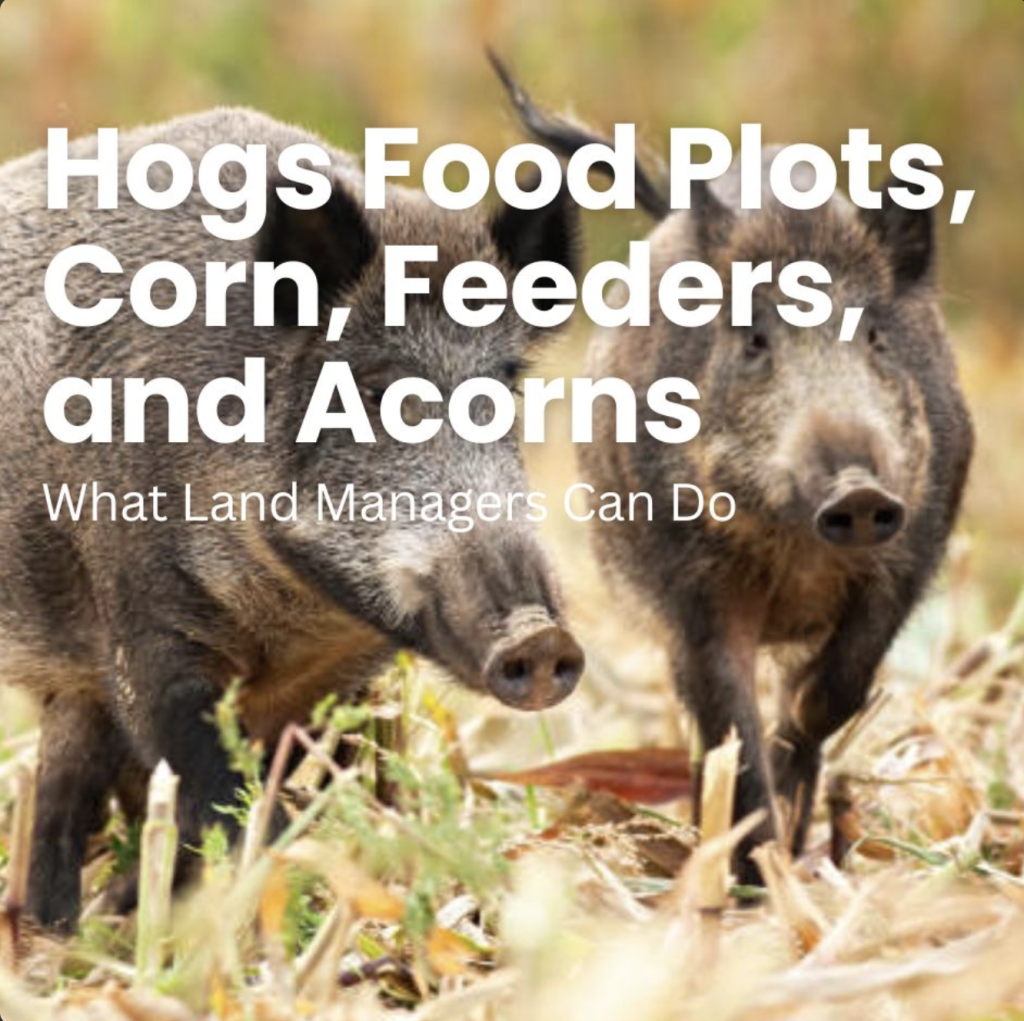
Hogs, Food Plots and Why the Circuit Matters
For deer managers, hogs destroy food plots, leaving torn forage, empty feeders, and fresh rooting. A sounder operates as a system that devastates your property. September makes that system expensive: fall plots are tender, feeders are active, and acorns are close to dropping. Pressure at one food source often pushes hogs to the next. Removing the sounder is cleaner.
Feral hog damage in the United States carries a conservative minimum of $3.4 billion annually (Pest Management Science, 2025). Locally, that means seed, fertilizer, corn, fuel, fence repair, and lost deer use.
Corn, Feeders, and Acorns Are Usually One Pattern
Analyze food plots, corn piles, deer feeders, and oak flats in conjunction. A sounder may test a plot edge, hit a feeder after dark, then shift into mast when acorns fall. If you shoot at one stop, survivors may keep using the route.
Use cameras to connect the dots. Compare size classes, markings, timing, and animals that hang back. When the same sounder is nervous near a plot but calm in an open feeding area, build the trap plan around the open site.
| Site | What hogs do | Better response |
|---|---|---|
| Food plots | Root and graze young forage. | Trap the complete sounder nearby instead of defending one corner. |
| Corn and feeders | Learn the feed source and return at night. | Use bait at a conditioned trap site, not as a long-term diversion. |
| Acorns | Shift across oak flats when mast drops. | Complete sounder work before heavy mast when possible. |
Do Not Build a Wild Hog Feeder
Wild hog feeders are not a control strategy. They concentrate hogs and retain breeding animals on the property. Instead, locate the open feed site the sounder already trusts, then leverage that pattern for a capture plan.
Pre-bait for 5 to 10 nights, and allow up to 14 nights in pressured areas. For corn-row layout and bait placement, use this guide to baiting hog traps.
Extension Sources
USDA APHIS and feralhogs.extension.org document crop, pasture, and habitat damage from feral swine. Partial control leaves survivors, and survivors keep feeding and breeding.
Whole-Sounder Removal Protects Deer Nutrition
Deer nutrition operates on a finite budget. Resources such as seed, fertilizer, lime, fuel, corn, and mast are vital for establishing and maintaining your deer management program. However, a sounder can rapidly deplete these resources, returning repeatedly until the site is barren or rendered unproductive by sustained pressure.
Removing the complete sounder gives the plot a chance to recover and lets feeders serve deer again. Leaving a remnant keeps the circuit alive. Mature bucks often abandon pressured feed first, which is why hog damage becomes a deer-pattern problem. The related hog pressure deer movement resource explains that shift.
A Land-Prep Sequence Before Archery
Map the plot, corn, feeder, water, and mast route with cameras. Pick the open site where the full sounder feeds with the least hesitation. Stage the trap there, keep bait consistent, and limit disturbance around the setup.
Wait until camera history shows the complete sounder committed. Do not act on the first hog that finds the bait. After capture, stop feeding hogs there and let the area settle. Keep deer stands, access routes, and feeding plans away from the trap footprint until the work is finished.
Where the Boar Blanket Net Fits Open Feeding Sites
The Boar Blanket net excels in open feeding areas. Install the net raised so hogs feed freely underneath during conditioning. Once cameras confirm the entire sounder feeding calmly and consistently, the trapper returns in person and manually lowers the net.
On the sounder’s next visit, hogs push under the lowered skirt to reach bait and trap themselves through passive self-entrapment. Cameras help confirm conditioning; they do not trigger the net. Product details are available on the Boar Blanket trapping system page, with broader budget context in feral hog trapping costs.
Frequently Asked Questions
- Do hogs wreck food plots?
Yes. They root, graze, bed, and return until forage is damaged or gone. - Will a hog feeder keep them off deer corn?
Usually not. Diversion feeding often keeps the sounder on the property and strengthens its pattern. - How long should I pre-bait?
Use 5 to 10 nights, and allow up to 14 in pressured areas. - What is the Boar Blanket approach?
Condition the complete sounder, manually lower the net, and let passive self-entrapment do the capture work.