
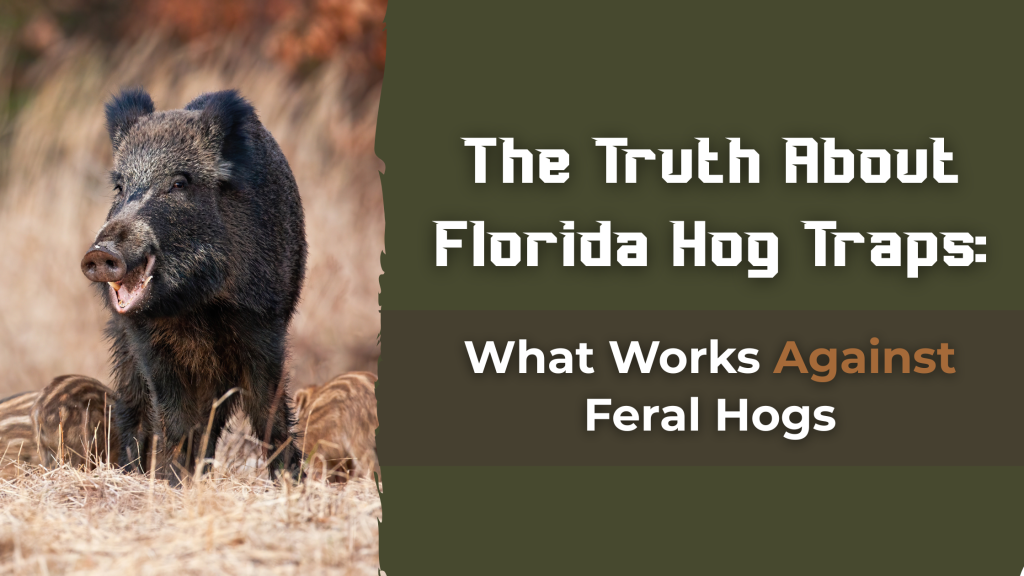
If you manage land in Florida, whether it’s a ranch, orchard, timber tract, or hunting property, you’ve likely had a run-in with wild hogs. These invasive animals are tearing up everything from sod farms to sugar cane fields, leaving thousands of dollars in destruction. But with Florida’s mix of swampy terrain, pine flatwoods, and humid subtropical weather, not all Florida hog traps are up to the task.
The Boar Blanket system is different. Designed for stealth, portability, and full-sounder capture, it’s proven effective in Florida’s most challenging environments. Unlike traditional traps that rely on steel or signal, Boar Blanket is a passive net system that operates silently and blends into natural terrain. This means less risk of spooking hogs, faster results, and less work for the landowner.
Let’s walk through why most traps fail in this region, and how a passive net system like Boar Blanket can outperform steel cages and drop gates.
Florida’s Wild Hog Epidemic
Florida is one of the top three states for feral hog population density, with an estimated 500,000+ wild pigs roaming from the Panhandle to the Everglades. They root up pasture, destroy native vegetation, carry diseases like pseudorabies and brucellosis, and create dangerous ruts that damage tractors and ATVs. They’re also known to threaten native wildlife and alter entire ecosystems.
What makes Florida especially difficult is the terrain:
- Soft, wet soil that collapses under traditional cage traps
- Thick underbrush and palmetto that limit trap access
- High humidity and frequent rain that rust out metal traps quickly
And that’s not all. Hogs in Florida are increasingly nocturnal, wary of human scent, and adept at avoiding obvious trap structures. That’s why traditional solutions often underperform here. You’ll need more than luck and loud equipment, you need a method that works with hog behavior, not against it.
Want to know what other states are facing similar issues? Visit our full hog trap state guide to see how terrain plays a major role.
Common Florida Hog Traps (and Where They Fall Short)
1. Cage Traps
- Easy to understand and set up, but usually catch only one or two pigs
- Prone to rust and collapse in Florida’s wet soil
- Hogs often spook and avoid cages after one capture attempt
These traps are readily available but rarely effective at scale. They often need to be reset and relocated, which can be time-consuming and labor-intensive.
2. Remote Drop Gates (BoarBuster, GameChanger)
- Use cameras and remote triggers to drop heavy gates
- Effective in open fields with strong cell signal, but Florida’s pine hammocks and remote ranches often lack coverage
- More expensive and harder to deploy without multiple people
Although these traps are flashy and modern, they can break under field conditions and require technical expertise and cellular infrastructure that many landowners just don’t have.
3. DIY Pit Traps or Old-School Pens
- Dangerous, inconsistent, and hard to reset
- Illegal in some Florida counties due to animal cruelty concerns
- Ineffective for full sounder capture
These solutions may feel cost-effective but are often ineffective and legally questionable.
Why Passive Net Traps Work Better in Florida
Boar Blanket doesn’t rely on tech, towers, or steel frames. It’s a net-based, ground-deployed trap system that blends into Florida’s wild environment. Here’s how it works:
- The net is raised off the ground during conditioning so hogs learn to feed safely.
- Once a pattern is established, the net is lowered to form a perimeter.
- Hogs continue entering as they push under the flexible net.
- Inside, the tapered net keeps them from escaping, no loud noises, no stress.
Florida landowners have found this method especially effective in palmetto flats and sandy pine woods where visibility is low and structure avoidance is high. Learn how whole sounder trapping works in our strategy breakdown.
What Makes Boar Blanket the Best Florida Hog Trap?
- No power required — perfect for remote backwoods and flooded fields
- Silent trapping — avoids alerting nearby hogs after the first entry
- Under one hour setup — solo operators can deploy with just T-posts
- Easy to relocate — light and flexible enough to move between feeder zones or bedding areas
And best of all? Boar Blanket’s performance isn’t theoretical, it’s field tested across the South, including real ranches and conservation land in Central Florida. You can view actual success stories in our Boar Blanket Case Study.
Explore our full Boar Blanket for pricing, specs, and a video walkthrough.
Florida Hog Traps: How to Start Your Trapping Plan
- Find sign: rooting, wallows, tree rubs, trails
- Pick a quiet bait site: away from busy roads, ideally with limited human scent
- Pre-bait for 3–5 days: use corn trails to encourage consistent feeding
- Monitor activity: check trail cam footage or visual signs
- Deploy Boar Blanket: stake the net using T-posts and raise it during the baiting phase
- Drop the net once the hogs are conditioned
Pro tip: Most Florida trappers report full-sounder capture within 48 hours of deployment once hogs are trained.
BONUS: Can You Eat Wild Hogs in Florida?
Yes, you can — and many Floridians do. Wild hog meat can be lean, flavorful, and a sustainable protein source when handled properly.
Tips from seasoned trappers (and Reddit wisdom):
- Don’t eat the big boars: Older, larger boars can be gamey or have “boar taint,” a musky odor that affects flavor.
- Stick to sows and smaller hogs: Ideally under 100–125 lbs for tenderness and taste.
- Cook thoroughly: Internal temps should reach at least 165°F to eliminate risks of trichinosis or brucellosis.
- Slow and low: Braising, smoking, or sausage-making are the go-to methods. Many trappers quarter the meat and smoke it in sections, or turn it into sausage for easier prep.
- Avoid cross-contamination: Use separate knives when field dressing and butchering to avoid tainting the meat.
As one Redditor said, “People who say you can’t eat wild hog just suck at cooking.”
Want to learn more about this topic? Check out our FAQ page where we tackle common concerns from landowners and trappers alike.
Ready to Trap Hogs? Try Florida Hog Traps That Work
Florida’s feral hog problem isn’t going away — and neither will the damage to your land unless you act. While hunting and cage traps offer temporary relief, only full-sounder trapping systems like Boar Blanket offer real results.
It’s portable, field-tested, and designed to handle the humidity, mud, and remoteness that define Florida’s wild spaces.
Visit our Florida Hog Trap Page to get started today.
Need help deciding? Start with the Florida Hog Trap Page above to find the right setup for your land, terrain, and trapping goals.
Let the wild hogs keep guessing. You’ll be one step ahead with the Boar Blanket.