
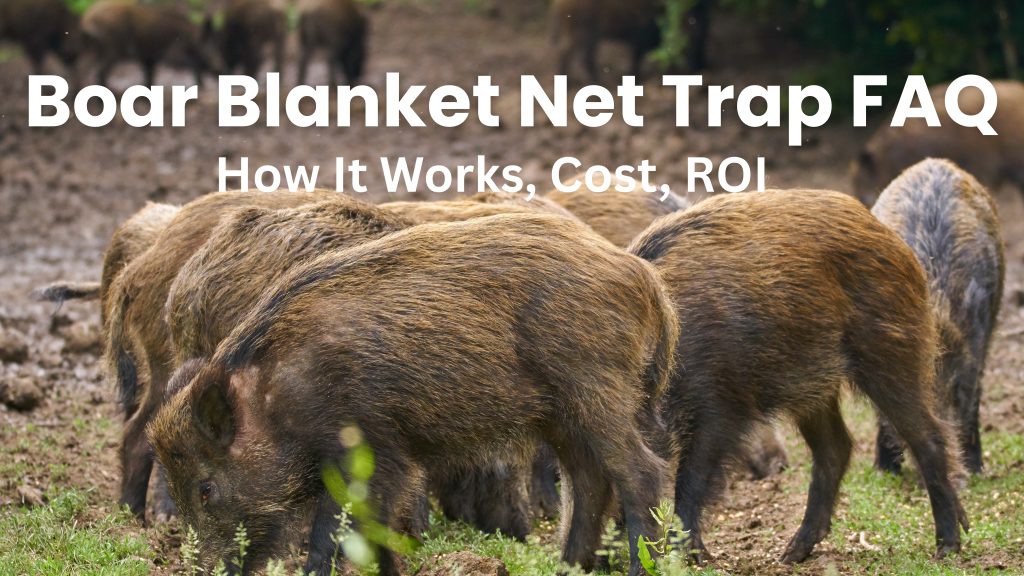
Boar Blanket Net Trap FAQ (How It Works, Cost, ROI)
What is Boar Blanket net trap Trapping?
Wild hogs destroy over $2.5 billion worth of crops every year. Regular traps only catch one or two pigs. Meanwhile, the rest keep breeding and damaging land.
Boar Blanket net trap traps drop nets from above to catch many pigs at once. These systems capture entire groups of 6-20 hogs in seconds. As a result, they control populations much faster than other methods.
The Boar Blanket trapping system leads today’s market. It combines strong nets with cameras and automatic triggers. Best of all, it catches hogs safely without the injuries that snares cause.
Traditional trapping methods fail because they target individual animals. When you catch one pig, others learn to avoid the trap. net-trap systems solve this problem by capturing whole groups before they can escape.
How Blanket Net Traps Work
Net traps use a simple concept. First, you hang a large net above a baited area. Next, you watch with cameras. Finally, when hogs gather below, you drop the net.
Follow these steps to set up your trap:
- Find the right location: Look for feeding areas or travel routes
- Install support poles: Make sure they stand 8-10 feet tall
- Attach the net: Use quick-release clips for fast drops
- Spread bait: Place corn or feed under the net
- Connect the trigger: Choose manual or automatic systems
Modern traps include cell phone cameras. Therefore, you can monitor from anywhere. Once enough hogs appear, you trigger the drop with your phone. The net falls instantly and traps them all.
Heavy weights line the net’s edges. These hold the hogs down while the strong mesh prevents escape. Because the system works so fast, you can catch entire groups before they scatter.
Success depends on proper timing. Wait until most hogs feed under the net. Then trigger the drop when they’re focused on eating. This approach maximizes your catch while minimizing escapes.
Boar Blanket net trap vs Traditional Cage Traps
Cage traps have been around for decades. However, they come with major drawbacks. A detailed trap comparison reveals why nets perform better.
Standard cage traps measure just 4×8 feet. They hold only 1-3 hogs per catch. After watching others get trapped, smart pigs learn to avoid them. Additionally, these heavy metal cages are difficult to transport.
Boar Blanket net trap systems offer clear advantages:
- Bigger catches: 20×20 foot nets capture entire groups
- Higher success rates: Pigs don’t fear overhead nets
- Portable design: Lightweight nets fold up small
- Better value: Cost per hog drops when you catch many
- Quick deployment: Set up new locations fast
Cage traps still serve a purpose. They work well for single problem animals. Small properties may also benefit from them. However, serious hog control requires net systems.
The biggest difference lies in catch efficiency. While cage traps might catch 20 hogs per year, net systems can remove that many in a single drop. This speed matters when populations grow rapidly.
Boar Blanket net trap vs Corral Traps
Corral traps use large circular pens built from panels. These enclosures span 20-30 feet across. Similar to nets, they can trap entire sounders at once.
When properly used, corrals catch many hogs. Unfortunately, they require major investments. Materials alone cost $2,000-$5,000. Plus, you need heavy equipment and multiple workers for setup.
drop-net traps outperform corrals in several areas:
- Lower price: Save 50-70% on equipment costs
- Solo setup: One person completes it in 2-3 hours
- Stealthy design: Overhead nets stay hidden
- Minimal maintenance: No panels to repair
- Compact storage: Everything fits in your truck
Corrals excel in certain situations. They withstand years of heavy use. Large ranches benefit from permanent corral installations. Yet for flexible trapping, nets provide more versatility.
Performance Comparison
Field tests prove both methods work. Corrals average 15-20 hogs per drop. Net systems typically catch 10-15. The gap comes from trap size and pig behavior.
Pigs approach corrals slowly and cautiously. In contrast, they walk directly under nets to reach bait. While corrals need more patience, nets allow trapping in diverse locations. This flexibility often leads to higher total catches.
Setup time creates another key difference. Building a corral takes 1-2 days with help. Meanwhile, one person can deploy a net system in hours. This speed lets you respond quickly to new damage reports.
When to Use a Blanket/Net Trap
Choosing the right trap depends on your situation. net-trap systems excel in specific conditions. Understanding hog tracks and travel patterns helps identify ideal locations.
Net traps work best when you face:
- Large sounders: Groups of 8 or more feeding together
- Open areas: Fields and clearings provide room
- Multiple sites: Properties requiring frequent moves
- Urgent problems: Quick response to fresh damage
- Remote locations: Places equipment can’t reach
Certain seasons boost net trap success. Winter concentrates hogs around food. Drought brings them to predictable water sources. Both conditions increase your catch rates.
Key Indicators for Net Trapping
Watch for signs that nets suit your needs. Trail cameras showing 10+ hogs together signal opportunity. Severe rooting damage appearing overnight demands quick action. Also, when small traps fail to reduce numbers, you need bigger solutions.
Consider your property features too. Net systems require overhead support. Trees provide natural anchor points. Open fields need pole systems, which take extra effort but still deliver results.
Match your method to your goals. For rapid group removal, choose nets. If gradual control works, other options might suffice. Most landowners find nets provide the speed they need.
Timing plays a crucial role in success. Deploy nets when hogs establish regular feeding patterns. Pre-baiting for 3-5 days creates predictable behavior. Then strike when the entire sounder feeds together.
Cost and ROI of Boar Blanket net trap Systems
Understanding costs helps justify your investment. Complete systems range from $1,500-$3,500. Fortunately, they typically pay for themselves within months.
Budget for these components:
- Net package: $800-$1,500 depending on size
- Pole system: $200-$400 for portable models
- Release mechanism: $150-$300 for quality triggers
- Trail camera: $200-$500 for cellular units
- Accessories: $150-$300 for ropes and hardware
Compare these costs to hog damage. One sounder destroys $5,000 in crops monthly. Vehicle collisions average $2,500 in repairs. Preventing this damage quickly covers your investment.
Calculating Your Return
Figure your savings using simple math. First, total your current monthly hog damage. Then estimate catches based on local populations. Finally, factor in time savings.
Consider a typical 40-acre farm. Monthly crop losses might reach $1,000. A net catching 15 hogs could reduce damage by 75%. Your trap investment returns in just 3-4 months.
Don’t forget labor savings. Traditional traps require daily visits. Camera-equipped nets cut trips by 80%. This saves fuel, time, and effort throughout the year.
Many farmers report additional benefits. Reduced stress from constant damage improves quality of life. Better crop yields increase profits. Some even earn money removing hogs for neighbors.
Long-term savings multiply quickly. One net system lasts 5-10 years with care. During that time, it prevents thousands in damage. Compare this to ongoing losses without proper control.
Where to Buy Boar Blanket net trap Traps
Finding quality Boar Blanket net trap traps requires careful shopping. Not every net performs equally. Therefore, choose established manufacturers for reliable results.
The Boar Blanket system dominates the market. Their products feature durable nets and dependable triggers. Customer support stands out too. They also offer various sizes for different sounder sizes.
Evaluate these features when comparing options:
- Material quality: UV-resistant nets that last years
- Weight system: Sufficient mass to secure hogs
- Trigger options: Both manual and automatic choices
- Support services: Installation help and ongoing advice
- Product warranty: Protection against defects
Ordering and Setup Process
Most companies ship within 1-2 weeks. Packages include detailed instructions and video guides. Reputable sellers provide phone support during your first deployment.
Prices vary by size and features. Basic 15×15 foot nets start around $1,200. Large 25×25 foot systems with cellular triggers reach $3,500. Most users find 20×20 foot models ideal.
Many vendors bundle cameras and bait feeders. These complete packages simplify ordering. All components work together seamlessly. Bulk purchases often qualify for discounts too.
Before ordering, study your typical group sizes. This data guides proper net selection. Remember, slightly oversized nets work better than undersized ones. A roomy net ensures you catch every hog present.
Smart buyers also consider future needs. Will you expand trapping efforts? Do neighbors want to share equipment? Planning ahead helps you choose systems that grow with your program.
Quality matters more than price alone. Cheap nets tear easily and fail at critical moments. Invest in proven systems that deliver consistent results. Your success depends on reliable equipment that performs when needed.