
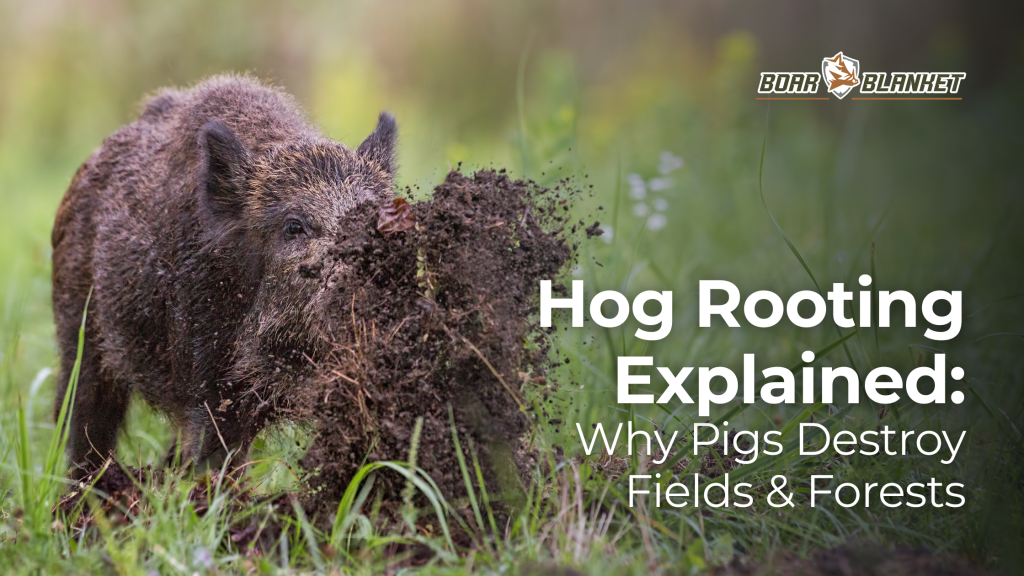
Introduction: Rooting Is the First and Most Costly Sign of Hog Activity
Hog rooting is the behavior most landowners notice first when wild pigs move onto a property. Overnight, a pasture that looked normal can resemble a freshly tilled field. Farm roads develop deep troughs. Garden edges lift and roll. Saplings are uprooted in small clusters. In some cases, lowland areas look like they were plowed in perfect patterns by machinery.
Rooting is more than a nuisance. It represents a major ecological and economic threat because it signals active feeding, travel patterns, and sounder behavior. Understanding why hogs root, how they choose locations, and what their patterns reveal helps trappers and landowners respond faster and with more accuracy.
This guide breaks down the biological and behavioral reasons behind rooting and explains what these signs tell you about the hogs using your land.
What Is Rooting?
Rooting is the process of hogs using their snouts to dig, flip, lift, or churn soil in search of food. A hog’s snout is built like a biological shovel, supported by cartilage and bone that act as a lever for lifting dense soil layers.
Rooting serves two main functions:
- Feeding
- Exploring or testing soil for future feeding
Because hogs are omnivorous and opportunistic, rooting reveals more than where hogs are feeding today. It often reveals where they will feed tomorrow.
Why Hogs Root: The Biology Behind the Behavior
1. Foraging for Underground Foods
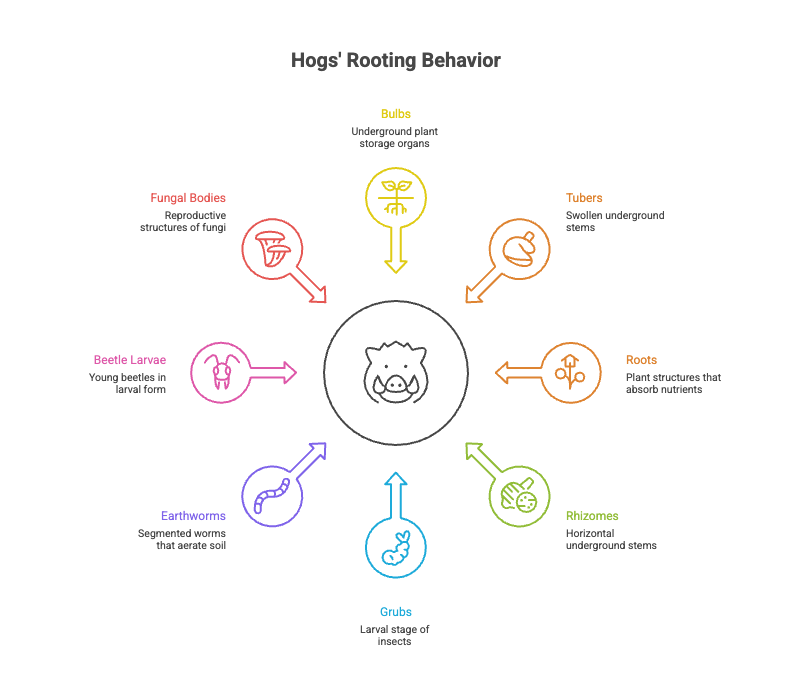
During mast seasons, hogs will root for buried acorns, pecans, and hickory nuts. During dry periods, rooting may intensify near moist soils where grubs and worms stay active.
2. Searching for Protein
Although many landowners think of hogs as herbivores, their rooting often targets:
- Small mammals in burrows
- Reptile nests
- Bird eggs
- Amphibians
- Carrion
Rooting is a primary method hogs use to locate protein-rich food sources.
3. Temperature Regulation and Parasite Relief
In wet conditions, hogs may root shallow soil to expose cooler earth for wallowing.
This behavior often pairs with rubbing on trees, which helps remove ticks and parasites.
4. Habitat Exploration
Not all rooting is deep-feeding. Sometimes hogs root lightly to test soil moisture, evaluate food availability, or scout new travel areas. These small patches often appear at the edges of fields or in transition zones.
For deeper damage examples, see Hog Damage 101
Table: Types of Rooting and What They Reveal About Hog Behavior
| Rooting Type | Soil Depth | What It Indicates | Likely Hog Activity |
| Shallow surface rooting | 1–3 inches | Exploration, testing for food | Early-stage site evaluation |
| Deep trench rooting | 4–10 inches | High-value food source present | Sounder-level feeding activity |
| Patchy, scattered rooting | Variable | Single hogs or small bachelor groups | Low pattern consistency |
| Wide-area “plowed” rooting | Large connected zones | Multiple sows and juveniles feeding | Active sounder using site nightly |
| Moist-area rooting | Shallow or deep | Searching for grubs or cooler soil | Seasonal moisture-based activity |
Understanding these patterns helps determine whether a single boar or a full sounder is present.
Where Hogs Choose to Root: The Environmental Drivers
Hogs do not root randomly. Their choices are influenced by moisture, soil type, plant communities, and seasonal food availability.
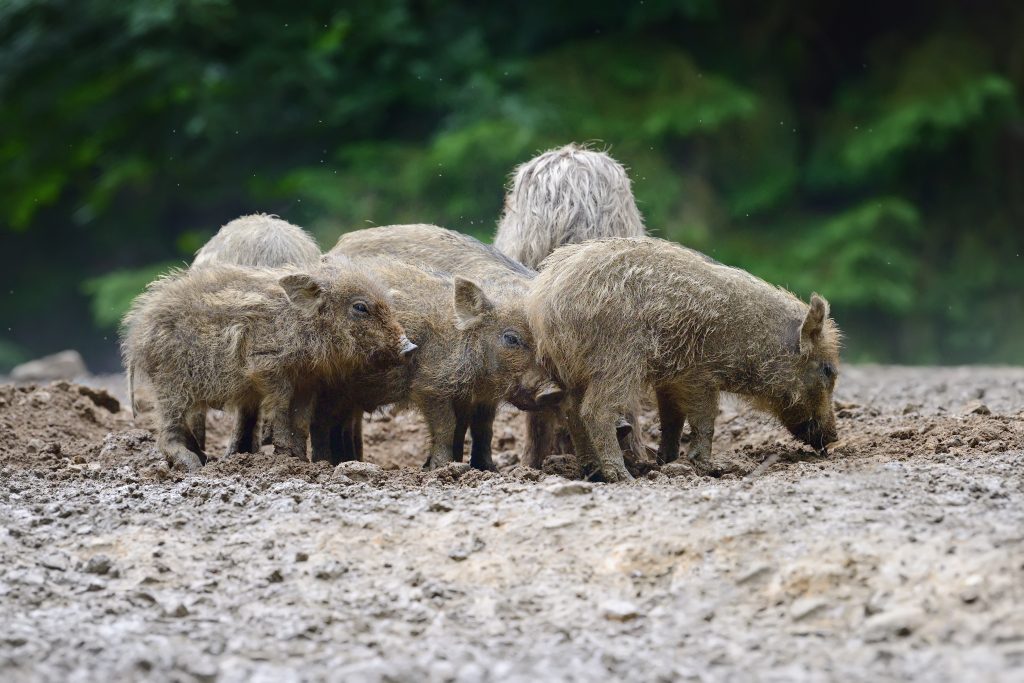
1. Moist or Loamy Soils
Fields with loamy, sandy, or moisture-rich soil are easy for hogs to turn.
These areas produce the widest patches of continuous rooting.
2. Pastures and Hay Fields
Rooting here commonly targets:
- Earthworms
- Grubs
- Tender roots
- Soil insects
In winter, hogs may root deeply to access dormant root layers beneath the frost line.
3. Forest Floors
Wooded areas containing:
- Oak
- Hickory
- Beech
are prime rooting locations during and after mast drop. Hogs detect buried acorns even when leaf litter is thick.
4. Agricultural Fields
Crop-specific rooting patterns include:
- Corn fields: rooting for leftover kernels and roots
- Peanut fields: rooting for residual nuts
- Rice fields: rooting along levees
- Soybean fields: rooting for exposed soil insects
These crop-driven patterns should be cross-referenced with local damage reports in State Impact Posts.
5. Wetlands, Creeks, and Drainages
Hogs root along edges of wetlands and creeks because these locations support soft soils and a high density of invertebrates.
Why Hog Rooting Causes So Much Damage
Rooting destroys landscapes for several reasons:
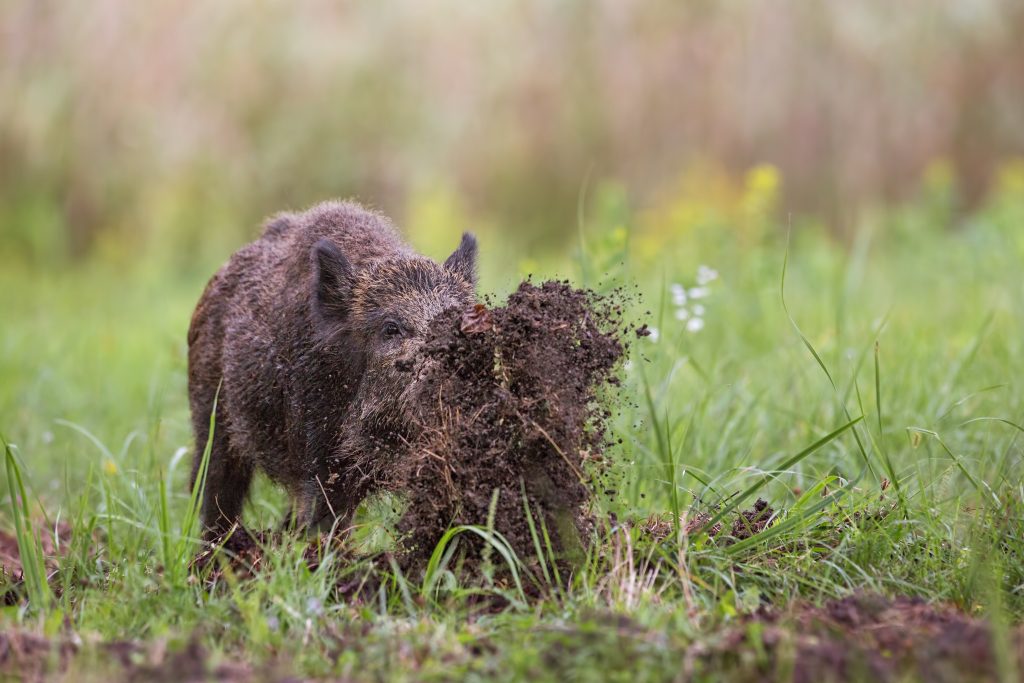
1. Soil Structure Breakdown
Rooting disrupts:
- Soil layers
- Aggregates
- Microbial communities
- Water retention
This destabilizes plant growth long term.
2. Erosion and Pasture Loss
Once soil is exposed, erosion increases, especially on slopes or in areas with heavy rainfall.
3. Crop Loss and Reduced Yield
Rooting removes seeds, destroys root systems, and exposes soil insects that hogs return repeatedly to feed on.
Crop recovery in rooted fields is often slow and uneven.
4. Wetland Disturbance
Rooting in wetlands accelerates sedimentation and disrupts native species such as amphibians and aquatic plants.
5. Infrastructure Damage
Road edges, levees, pond dams, and fence lines often show severe rooting damage after rain events.
These problems contribute to the long-term financial costs documented in the Boar Blanket Case Study.
Seasonal Hog Rooting Patterns Landowners Should Watch
Rooting intensity and location shift throughout the year. Seasonal awareness helps identify sounder movements.
Spring
Hogs target moist fields for worms, insects, and new plant growth.
Summer
Rooting intensifies around:
- Water sources
- Creek beds
- Irrigated pastures
Heat drives hogs toward shaded, damp soil where food is easier to access.
Fall
Mast crops (acorns, pecans) drive heavy rooting in hardwood forests.
Winter
In cold regions, hogs root deeper in search of dormant root structures.
In warm regions, winter rooting resembles spring patterns.
Understanding seasonality helps predict where hogs will concentrate next on your property.
What Hog Rooting Tells You About Trapping Opportunity
Rooting patterns reveal a great deal about hog behavior:
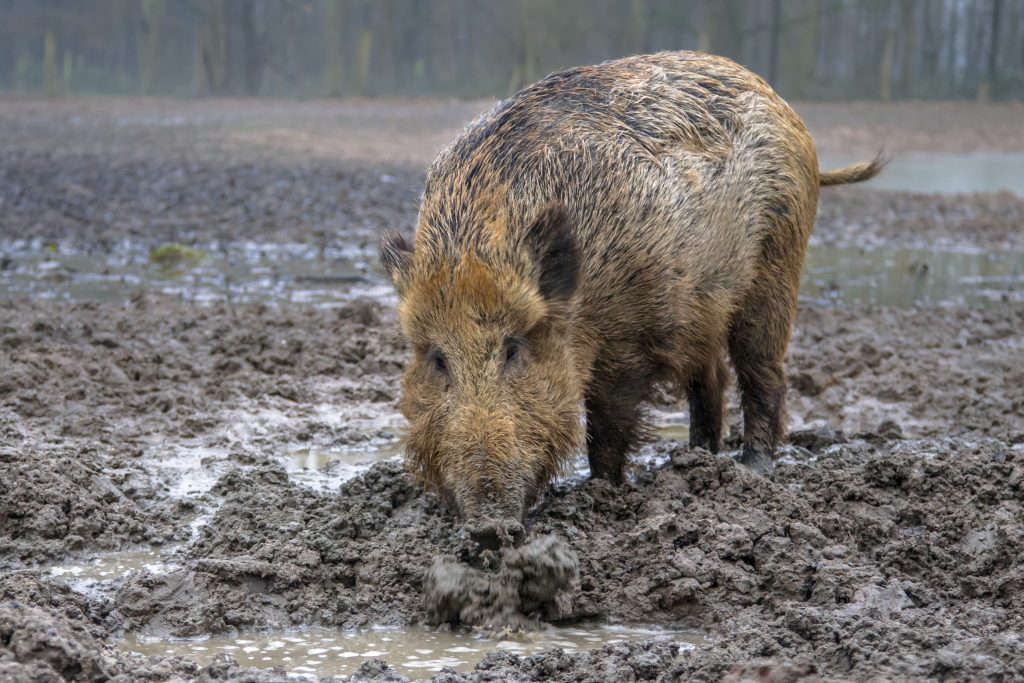
Consistent hog rooting equals consistent visitation
If rooting appears every 24–48 hours, hogs are using the site regularly.
Large-area hog rooting often indicates a full sounder
Multiple sows and juveniles typically root in wide, overlapping patterns.
Linear hog rooting may indicate travel routes
These routes help identify where to place cameras or scouting traps.
Fresh hog rooting is ideal for scouting
If rooting is moist and the soil edges are bright, hogs likely visited within the past few hours.
Landowners can use rooting indicators to refine bait placement and timing.