
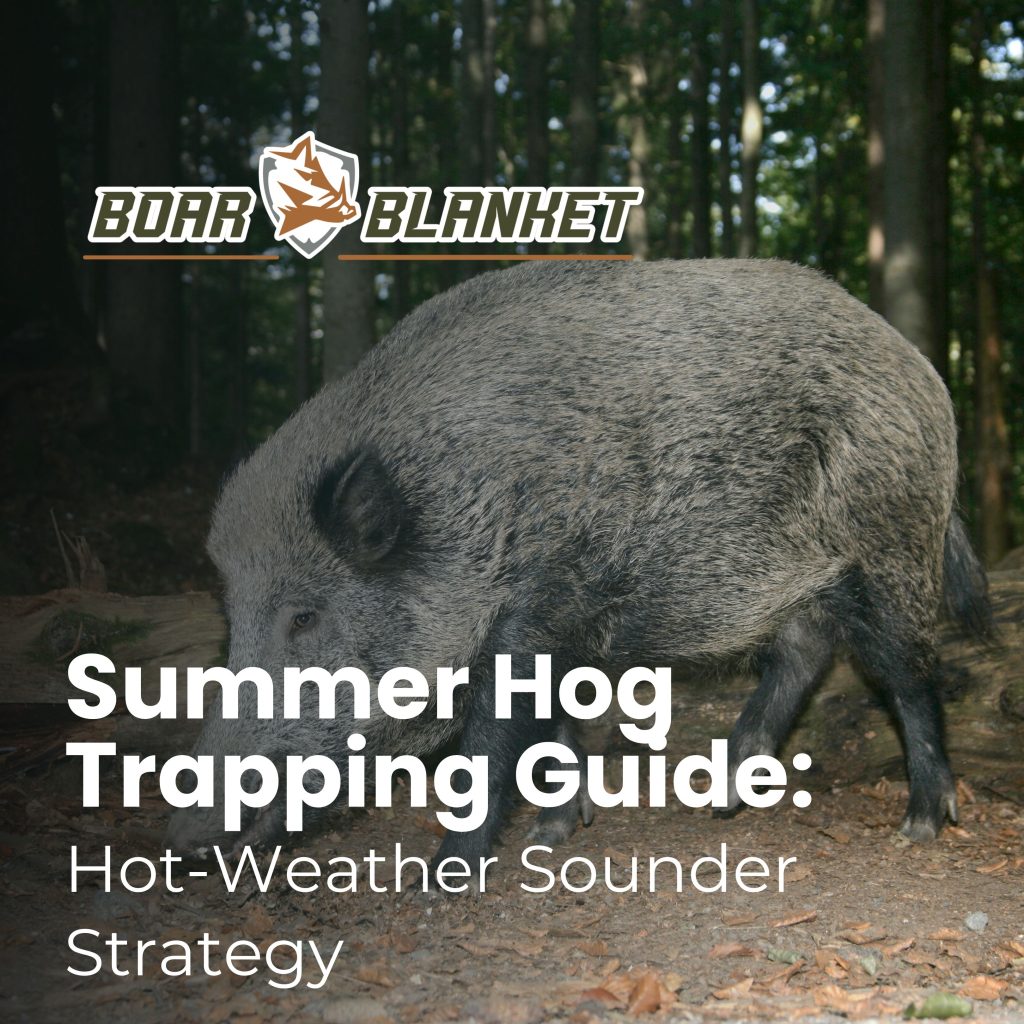
Summer Hog Trapping Guide: Hot-Weather Sounder Strategy
Why Summer Changes Everything for Hog Trapping
Feral hogs are a year-round threat, but hog trapping in summer brings unique challenges. As temperatures rise, hogs change their daily routines, feeding times, and even their willingness to enter traps. Overlooking these seasonal shifts can waste months and create trap-shy sounders that are much harder to catch later. Successful summer hog trapping demands water-anchored sites, heat-aware bait management, and tighter closure-window discipline.
Most general trapping advice applies to all seasons, but summer requires a focused approach. Every step—site selection, baiting, monitoring, and closure—must adapt for high temperatures. This guide covers proven summer tactics, including the Schell mud-hole method and camera-driven closure, so you avoid common mistakes and improve your summer catch rates.
How Heat Reshapes Hog Behavior: Nocturnal Shift, Water Dependency, Feeding Windows
When temperatures climb above 85°F, feral hogs become much more nocturnal. They avoid daytime heat by feeding mostly between 9 p.m. and 2 a.m. Water becomes their top priority. Hogs will travel farther and change their routes to find it.
Sounders often move as a tight group to water and back. When water is scarce, they may split up, which increases the risk of catching only part of the group. Understanding these patterns is essential for setting traps and timing closures. For more on sounder behavior, see our sounder of hogs complete guide.
For example, summer hog trapping works best when the bait site, water source, and camera coverage all support the same closure window.
The Summer Bait Problem: Spoilage, Fermentation, and Holding Power
Bait spoils quickly in hot weather. Corn and grains rot fast above 90°F, drawing insects and non-target animals. Fermentation can help for a few days, but bait soon turns sour or moldy. Both commercial attractants and homemade mixes need more frequent refreshing in summer.
Holding power—the time bait keeps hogs at the site—drops in the heat. Hogs feed quickly and leave, often staying only 60–90 minutes. This narrow window makes camera-driven closure discipline vital. For detailed bait tips, see our hog trap bait guide.
Water as the Anchor of Every Summer Trap Site
Water is the most important factor for hog trapping in summer. Sites near ponds, creeks, or mud holes always outperform dry spots from June through August. Hogs will skip even the best bait if water is not close. In fact, catch rates at dry sites often fall by 50% or more during summer.
When scouting, pick trap sites within 100 yards of water. If there is no natural water, you must create it. Otherwise, hogs will move to neighboring properties. This is the core of the Schell method, explained next.
Building a Mud Hole When You Don’t Have Water
As BB_PRODUCT_FACTS.md §6 notes: “If you don’t have any water on a site where you know hogs are active, you can create a mud hole with several buckets of water.” This simple trick can turn a dry site into a summer hotspot.
- Pick a shaded, low spot inside your trap or just outside the gate.
- Dig a shallow hole (4–6 inches deep, 3–4 feet wide).
- Pour 5–10 buckets of water into the hole, mixing in loose soil.
- Refresh the mud every 2–3 days, or after rain.
- Scatter bait around the mud hole to attract hogs.
Hogs will wallow, cool off, and linger longer—giving you a better closure window. This method works best when natural water is more than a quarter mile away.
Conditioning Timeline in Summer: Why Night 8–10 Still Holds
Some trappers think summer means faster conditioning, but the proven Night 1–2 / 3–5 / 5–8 / 8–10 timeline still works. Hogs may arrive later and feed for less time, but they still need 8–10 nights to fully accept a new trap or net site.
In summer, the feeding window is shorter. Hogs may only visit for 60–90 minutes, usually after dark. Skipping steps in the conditioning process leads to partial-sounder catches and educated survivors. Patience is key—wait until cameras show the entire sounder is entering before closing. For a full trapping timeline, see our wild boar trap comprehensive pillar guide.
Equipment Heat Stress: Cameras, Batteries, Latches, and Solar
Summer heat stresses trapping equipment as much as it does hogs. Trail cameras and remote systems can suffer battery drain, overheating, and solar panel issues. The HogEye camera, for example, uses a 50 amp-hour lithium battery and a 75-watt solar panel. When installed right—camera and T-post upright, panel facing south—it can survive even the hottest Texas summer.
Batteries degrade faster above 100°F, and plastic latches or seals may warp. Check all moving parts, oil gate mechanisms, and shade electronics when possible. For more on camera setups, see our hog trap camera setup guide.
Operator Safety: Heat, Snakes, and Insects on Daily Trap Checks
Summer trapping puts extra demands on operators. High heat increases the risk of dehydration, heat exhaustion, and sunburn. Snakes and biting insects are also more active, especially near water and mud holes.
- Check traps early in the morning or late in the evening to avoid peak heat.
- Wear boots and gloves for protection against snakes and insects.
- Bring water, sunscreen, and insect repellent on every visit.
- Never work alone in remote areas during extreme heat.
Daily checks are essential for animal welfare and compliance. For more on preventing property damage and operator risks, see our wild hog damage prevention guide.
Camera-Driven Decisions: Reading Sounder Behavior in the Heat
Summer trapping success depends on reading camera footage, not just checking for activity. Use cameras to confirm:
- When the sounder arrives and leaves (closure window)
- How many hogs are present each night
- If all individuals are entering the trap or net area
In summer, sounders may only visit for 60–90 minutes. If cameras show two empty nights, the sounder may have shifted patterns—adjust your program quickly. For more on camera-driven trapping, see our Boar Blanket trapping system overview.
Closure Discipline When the Sounder Only Shows for 90 Minutes a Night
Do not lower the net or close the gate until two things are true:
- The closure window is clear on camera (know exactly when the sounder enters and leaves).
- The full sounder is inside the trap or under the net.
Summer raises the risk of partial-sounder closures. If you close too early, survivors learn to avoid traps and may move to properties with better water. This can set your program back months. Keep closure discipline, even if it means waiting several extra nights. For more on closure strategies, see our Texas hog trapping guide.
Common Summer Mistakes That Set the Program Back Months
Many trapping programs stall in summer due to avoidable errors. The most common mistakes include:
- Setting traps too far from water or failing to make a mud hole
- Skipping the full 8–10 night conditioning process
- Letting bait spoil, which lowers holding power and attracts non-targets
- Closing the gate or net before the entire sounder is present
- Ignoring camera data or failing to adjust when empty nights appear
Fixing these issues takes discipline and attention to detail. For a full breakdown of seasonal strategy, see our Texas hog trapping guide.