
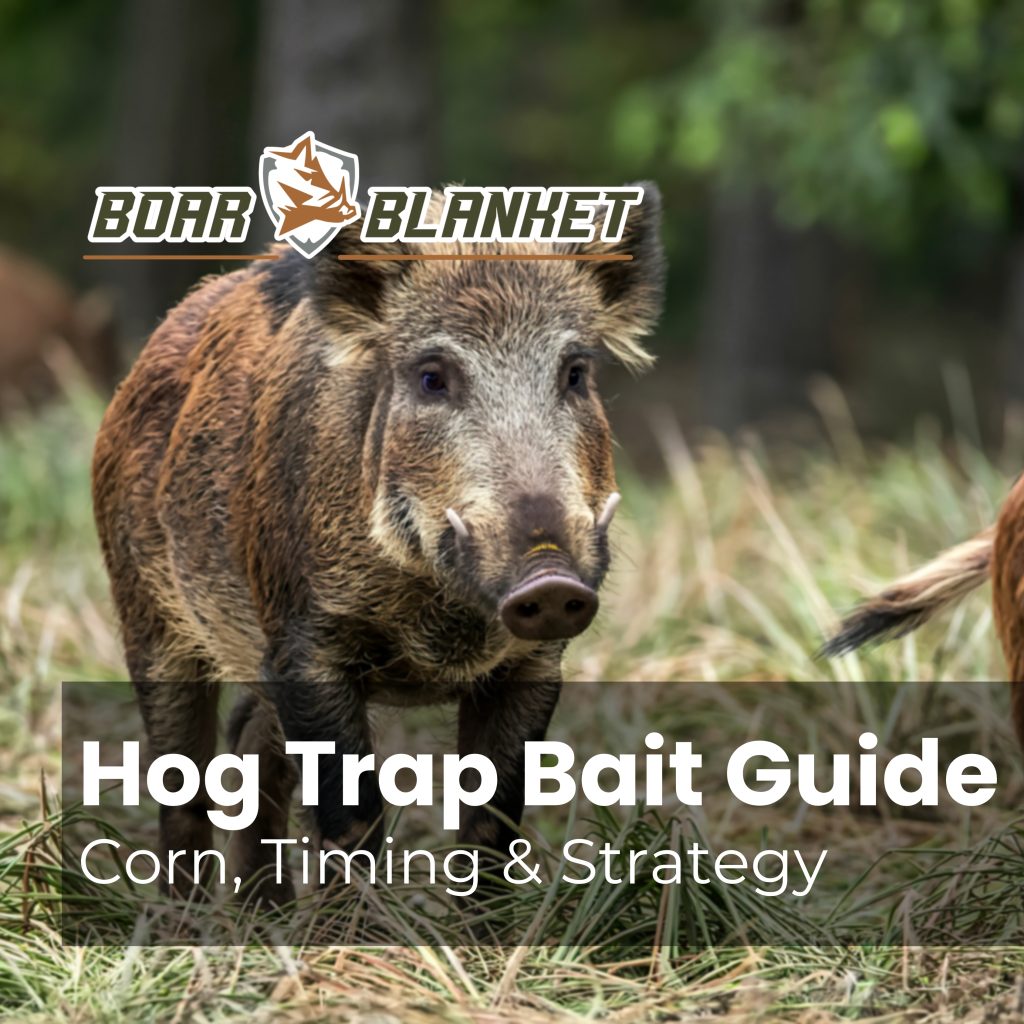
Hog Trap Bait Guide: Corn, Timing & Strategy
What ‘Bait’ Means in a Whole-Sounder Trap Program
A solid hog trap bait program is the difference between capturing an entire sounder in one night and catching three wary hogs while the rest scatter. Feral hogs cause $2.5 billion in damage each year across the United States. Most land managers fight back with traps, but many fail to understand what bait actually does in a trap program.
Bait is not about feeding hogs. That approach wastes time and money. Instead, bait builds a repeatable closure window — a predictable moment when the entire sounder feeds together at one location. Your gate or trap closes during that window, not before or after.
The difference matters. Random feeding brings random hogs. Conditioning brings the whole group. Whole-group capture removes the breeding population in one event. Partial capture leaves survivors that breed trap-shy offspring. Poor bait strategy sets your program back months.
This guide explains bait as a function of the closure window. You will learn the conditioning timeline, bait types, summer water strategy, placement rules, and the mistakes that break a 10-night program. By the end, you will know how to turn corn into a capture instead of just another feeding event.
For more on trap selection and deployment strategy, see our wild boar trap comprehensive guide.
The Conditioning Timeline: Night 1 Through Night 10
Conditioning is not guesswork. Wild hogs follow predictable patterns when they discover a new food source. The timeline below shows what typically happens from the first night through the closure window.
| Phase | Nights | What to Look For on Camera | When to Act |
|---|---|---|---|
| Discovery | Night 1–2 | No contact, or a single hog passing through the edge of the site. Bait remains untouched or only slightly disturbed. | Maintain bait. Do nothing else. |
| Scout | Night 3–5 | Mature sow circles and evaluates the site. She may feed briefly or just watch. The sounder does not appear yet. | Maintain bait. Watch for the sow’s pattern to stabilize. |
| First Sounder Approach | Night 5–8 | Full group arrives for the first time. They may be nervous, quick, or visit at irregular hours. Not all members feed calmly yet. | Maintain bait. Do not close. Confirm consistent attendance across multiple nights. |
| Full Conditioning | Night 8–10 | Reliable closure window established. The entire sounder feeds calmly, repeatedly, at predictable times. All members are present and committed. | Close the gate or lower the trap during the next confirmed closure window. |
Budget 5–10 nights minimum for most scenarios. Pressured areas or large sounders commonly need 14 nights. That is not unusual. Rushing this timeline is the single most common cause of partial captures.
Your camera system is what makes the timeline visible. Without footage, you are guessing. With footage, you know exactly when the closure window opens.
Bait Types: Corn, Sour Corn, Commercial Attractants, DIY Mixes
Four categories of bait dominate hog trapping operations: corn, sour corn, commercial attractants, and DIY mixes. Each has distinct cost, holding power, and seasonal performance characteristics.
| Bait Type | Cost Per Night (50 lb site) | Holding Power | Non-Target Draw | Summer vs Winter |
|---|---|---|---|---|
| Whole Corn | $8–$12 | Medium | Moderate (deer, raccoons) | Works year-round. Reliable baseline. |
| Sour Corn | $10–$15 (includes fermentation time) | High | Low (hogs prefer it over non-targets) | Stronger in summer heat. Scent carries farther. |
| Commercial Attractant | $15–$25 (gel or spray supplement) | High | Low | Consistent across seasons. Concentrated scent. |
| DIY Mix (corn + molasses + salt) | $10–$18 | Medium-High | Moderate | Works well in summer. Ferments naturally in heat. |
Whole Corn — The Baseline
Whole corn is the standard for a reason. It is cheap, available at farm stores year-round, and hogs recognize it immediately. A 50-pound bag costs $8–$12 and covers one bait site for one night in most scenarios.
Corn works because hogs already feed on it in agricultural areas. They do not need to learn the food. But corn alone does not produce the strongest scent trail. In pressured areas or thick cover, you may need to add an attractant to pull hogs from farther away.
Sour Corn — Fermented Advantage
Sour corn is whole corn fermented in water for 3–7 days. The fermentation process produces a sour, pungent smell that hogs prefer over fresh corn. The scent carries farther, and non-target species like deer are less interested.
To make sour corn, fill a 5-gallon bucket halfway with corn, add water to cover, and leave it in the sun. Check it daily. When the smell is strong and the corn is soft, it is ready. Use it the same way you would use fresh corn, but expect stronger commitment from the sounder.
Sour corn works especially well in summer when heat accelerates fermentation and scent dispersal.
Commercial Attractants
Commercial hog attractants come as gels, sprays, or granules. Most use concentrated scent compounds derived from corn, molasses, or fruit. You apply them on top of your base corn pile to boost holding power.
These products cost more per night, but they work in situations where plain corn is not enough. Remote sites, thick brush, and areas with competing food sources all benefit from attractant supplements. Follow the manufacturer’s instructions for application rates.
DIY Mixes
Many trappers build their own bait mixes. A common recipe is 50 pounds of corn, 1 gallon of molasses, and 1–2 pounds of salt. Mix it in a bucket and let it sit for 24 hours before use. The molasses adds sweetness and stickiness. The salt acts as a mineral attractant.
This mix costs $10–$18 per site per night depending on ingredient prices. It performs similarly to commercial attractants but requires more prep time.
Summer Bait Strategy: Why Water Changes Everything
Summer is the hardest season for hog trapping. Heat stresses hogs, and they shift their feeding patterns to stay near water. A bait site without water will not hold a sounder in June, July, or August.
If your site has no natural water, create a mud hole. Fill several 5-gallon buckets with water and pour them into a low spot near your bait pile. Hogs will wallow in the mud hole before and after feeding. The mud hole becomes part of the closure window.
This advice comes directly from field operators who run successful summer programs. Bait sites near water significantly out-produce sites away from water during the summer months.
You do not need a pond or a creek. A mud hole created with 15–20 gallons of water will hold hogs for several days in most soil types. Refresh the water every 3–4 nights if the hole dries out.
Bait Placement and Volume for Predictable Commitment
Where you place bait and how much you use determines whether hogs commit to your site or just pass through.
Placement Rules
Place bait in a concentrated pile at the center of your trap or bait site. Do not scatter it. A concentrated pile forces the sounder to feed together in one location. Scattered bait spreads the group out and makes the closure window unpredictable.
Choose a location with clear camera angles. You need to see every hog on camera to confirm full-group attendance. Thick brush or uneven ground makes counting impossible.
Avoid placing bait near natural cover where hogs can bolt quickly. Open feeding areas produce calmer, more predictable behavior. A sounder that feeds in the open is a sounder that is ready to be captured.
Volume Guidelines
Use 30–50 pounds of corn per site per night for a typical sounder of 8–15 hogs. Larger groups need more. Smaller groups need less. Your camera footage will tell you if you are running out of bait before the sounder finishes feeding.
Running out of bait during a feeding event teaches hogs to arrive earlier and rush. That behavior breaks the closure window. Always provide enough bait so the sounder can feed calmly until they are satisfied.
Daily Bait Maintenance and the Two-Empty-Nights Rule
Bait maintenance is not optional. Missing bait for even one night can disrupt conditioning. Missing it for two nights in a row shifts the sounder’s pattern entirely.
The Two-Empty-Nights Rule
If a sounder arrives to find an empty bait site two nights running, they will shift to a different feeding pattern. They may stop visiting your site altogether, or they may visit at unpredictable hours. Either way, you lose the closure window.
This rule applies even after conditioning is complete. If you plan to delay closure for any reason, you must maintain bait every single night until you close the gate or lower the trap.
Daily Monitoring via Camera
Check your camera footage every morning. Confirm that the sounder fed as expected and that bait remains for the next visit. If bait is running low, refresh it before nightfall.
Remote camera systems make this easy. You watch footage from home and only drive to the site when bait needs refreshing or when the closure window is open. That approach eliminates wasted trips and keeps your program on schedule.
How Camera Monitoring Shapes Your Bait Plan
Bait and cameras are not separate tools. They work together. Your camera tells you when to add bait, when to change bait types, and when to close the gate or trap.
What to Watch For
Watch for these patterns in your footage:
- Arrival time consistency: Does the sounder arrive within the same 2-hour window each night? Consistent timing means conditioning is working.
- Feeding duration: How long does the sounder feed? Rushed feeding means not enough bait or pressure from predators. Calm, long feeding means they are committed.
- Group composition: Are all members present? Count individuals across multiple nights. Missing juveniles or sows means the closure window is not open yet.
- Non-target activity: Are deer, raccoons, or other species eating your bait before the sounder arrives? If so, switch to sour corn or attractants that hogs prefer.
Adjusting Based on Footage
Your footage drives decisions. If the sounder is arriving later each night, they may be pressured by hunting or other disturbance. If they are feeding quickly and leaving, increase bait volume. If only part of the group is attending, wait longer before closing.
Remote monitoring systems let you watch live or review footage from anywhere. You make bait decisions without driving to the site. That saves time and reduces your scent footprint near the trap.
Learn more about camera setup and placement in our hog trap camera setup guide.
The Closure Window: When Conditioning Becomes Capture
The closure window is the moment when bait becomes capture. It is the predictable time and place where the entire sounder feeds together, calmly, and consistently. Your gate or trap closes during that window.
How to Recognize the Closure Window
You know the closure window is open when:
- The entire sounder is present on camera.
- They feed calmly without rushing or bolting.
- They arrive within a consistent 2-hour window each night.
- This pattern repeats for at least 2–3 consecutive nights.
If any of these conditions are missing, the window is not open yet. Wait. Maintain bait. Review more footage.
Closing at the Right Moment
For corral traps with remote gates, you close the gate from your camera system once the full sounder is inside. For net trap systems like the Boar Blanket, you return to the site in person and manually lower the net after conditioning is confirmed. The hogs then trap themselves on their next visit.
Either way, timing is everything. Close too early and you catch a partial group. Close too late and the sounder may shift patterns. The closure window is narrow. Your camera footage is what lets you see it.
Partial-Sounder Risk and Trap-Shy Survivors
Catching part of a sounder is worse than catching nothing. Survivors learn. They teach their offspring to avoid traps. The next generation is trap-shy before they are even born.
Why Partial Captures Fail
Wild hogs breed fast. One sow can produce up to 20 piglets per year. If you catch the juveniles but miss the breeding sows, the population rebounds within months. If you catch some sows but miss others, the survivors breed with the remaining boars and rebuild the sounder.
Worse, survivors remember the trap. They avoid the site. They feed elsewhere. Your bait program stops working. You have to start over on a new site with new conditioning time and new costs.
The Cost of Poor Timing
A poorly-timed closure sets your program back by months. You lose the time and money you invested in conditioning. You lose the bait you used. You lose the opportunity to remove the breeding population in one event.
That is why the conditioning timeline matters. That is why you wait for the full closure window. That is why you do not rush.
Bait Mistakes That Break a 10-Night Program
Most bait programs fail because of simple mistakes. Here are the most common ones and how to avoid them.
Mistake 1: Scattering Bait Instead of Concentrating It
Scattered bait spreads the sounder out. You cannot see all the hogs on camera at once. You cannot confirm full-group attendance. You close the gate or lower the trap when only part of the group is inside. Concentrate your bait in one pile.
Mistake 2: Running Out of Bait During Feeding
When bait runs out before the sounder finishes feeding, they learn to rush. They arrive earlier. They compete for food. Calm, predictable feeding behavior disappears. Always provide enough bait for the entire group to feed until satisfied.
Mistake 3: Missing Bait for Two Consecutive Nights
The two-empty-nights rule is not a suggestion. It is a fact of hog behavior. Miss bait two nights running and the sounder shifts patterns. You lose the closure window. Start over.
Mistake 4: Closing Before the Full Sounder Commits
Impatience costs money. If you close the gate or lower the trap before the full sounder is committed, you catch a partial group. Survivors breed. The program fails. Wait for the closure window. Confirm it on camera. Then act.
Mistake 5: Ignoring Summer Water Needs
Hogs need water in summer. A bait site without water will not hold a sounder in hot weather. Create a mud hole. Refresh it every few nights. Water is as important as bait in June, July, and August.
Mistake 6: Changing Bait Types Mid-Conditioning
Switching from corn to sour corn or from one attractant to another mid-program can reset the timeline. Hogs need to learn the new smell and taste. If you must change bait types, do it early in the conditioning phase, not during the closure window.
Mistake 7: Over-Checking the Site in Person
Every trip to the bait site leaves scent. Human scent makes hogs nervous. Nervous hogs do not feed calmly. Use remote cameras to monitor the site and only visit when you must refresh bait or close the trap. Learn more about scent control and pre-baiting.
Ready to Build Your Hog Control Program?
Bait is only one piece of a complete hog control program. The right trap system, camera monitoring, and operational strategy determine whether your program succeeds or fails.
Explore our full lineup of hog trap systems designed for whole-sounder capture. From net traps to corral systems with remote gate closure, we build equipment that pairs with the conditioning strategy you just learned.
Need help choosing the right system for your property? Check our wild boar trap comprehensive guide or contact our team. We support land managers across the United States with trap selection, setup, and operational guidance.
Frequently Asked Questions
What is the best bait for a hog trap?
Whole corn is the baseline. It works year-round, costs $8–$12 per 50-pound bag, and hogs recognize it immediately. Sour corn and commercial attractants increase holding power in pressured areas or thick cover. In summer, pair bait with water or a mud hole for best results.
How long should I pre-bait before closing the gate or trap?
Budget 5–10 nights minimum. Pressured areas or large sounders commonly need 14 nights. Do not close until camera footage confirms the entire sounder is feeding calmly, repeatedly, at predictable times. Rushing this timeline causes partial captures.
How much corn do I need per bait site each night?
Use 30–50 pounds per site per night for a typical sounder of 8–15 hogs. Larger groups need more. Your camera footage will tell you if bait is running out before the sounder finishes feeding. Always provide enough so they can feed calmly until satisfied.
Does sour corn work better than regular corn?
Yes, in most scenarios. Sour corn produces a stronger scent that carries farther. Hogs prefer it over fresh corn, and non-target species like deer are less interested. It works especially well in summer when heat accelerates scent dispersal. Ferment whole corn in water for 3–7 days before use.
What bait works best in summer when water is scarce?
Pair any bait type with water. Create a mud hole near your bait pile using 15–20 gallons of water poured into a low spot. Hogs will wallow before and after feeding. Bait sites near water significantly out-produce sites without water in summer months. Refresh the mud hole every 3–4 nights.
How do I know the entire sounder is committing to the bait site?
Use camera footage to count individuals across multiple nights. The entire sounder is committed when: (1) all members are present on camera, (2) they feed calmly without rushing, (3) they arrive within a consistent 2-hour window each night, and (4) this pattern repeats for at least 2–3 consecutive nights.
Can I use bait to re-pattern a trap-shy sounder?
It is difficult. Trap-shy hogs avoid sites where they experienced a capture or near-capture. You will need a new site, longer conditioning time, and possibly a different trap type. Prevention is easier than correction — always wait for the full closure window on the first attempt.
Should I change bait types during conditioning?
Avoid it. Changing bait mid-program can reset the timeline as hogs learn the new smell and taste. If you must change types, do it early in the conditioning phase (Night 1–3), not during the closure window (Night 8–10). Consistency builds predictable behavior.
How do I keep non-target species out of the bait site?
Switch to sour corn or commercial hog attractants. These produce scents that hogs prefer but deer and raccoons find less appealing. You can also increase bait volume so enough remains for the sounder even after non-targets feed. Remote cameras let you monitor non-target activity and adjust bait timing.
What happens if the sounder finds an empty bait site?
One empty night may disrupt timing but usually does not break conditioning. Two empty nights in a row will shift the sounder’s pattern. They may stop visiting your site or visit at unpredictable hours. Either way, you lose the closure window. Maintain bait every single night until you close the gate or trap.