
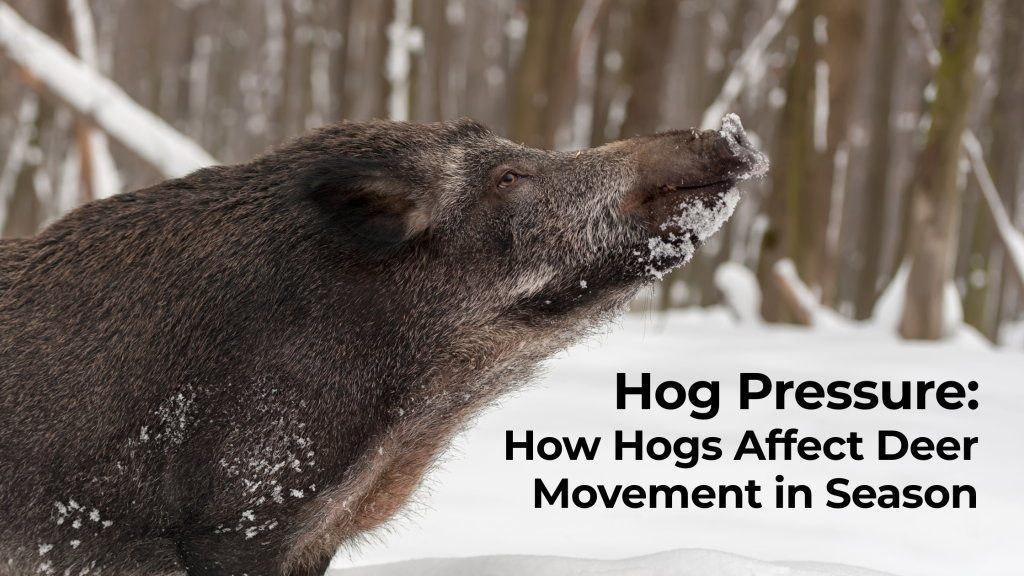
Wild hogs and whitetail deer often share the same habitat, food sources, and travel corridors. During deer season, this overlap becomes a major frustration for landowners and hunters who suddenly notice quiet mornings, empty feeders, and deer disappearing from camera patterns. The cause is often hog pressure, a powerful disruptor that changes deer behavior more than most people realize.
This guide explains how hogs affect deer movement, how to spot hog-related disruptions, and why removing the entire hog sounder is the only reliable solution.
Why Understanding Hog Pressure Matters During Deer Season
Hogs are aggressive feeders, dominant around limited food sources, and notorious for pushing deer away from preferred areas. When hogs begin to frequent feeders, oak flats, or crop edges, deer often:
- Shift to nocturnal behavior
- Avoid open feeding zones
- Change travel routes
- Leave the area entirely
Statistics That Matter
- Studies show deer reduce feeder visits by up to 70% when hogs are present.
- Wildlife researchers confirm hog scent and rooting activity cause deer to alter travel corridors.
- One sounder can consume as much food as 25 deer in a single night.
The more hog pressure in an area, the more deer shift their behavior.
How Hogs Physically and Behaviorally Disrupt Deer
Hogs outcompete deer for food at every stage of the season.
1. Hogs Dominate Food Sources
- Corn feeders
- Mast crops (acorns, pecans, hickory)
- Agricultural crops
- Soft mast (persimmons, apples)
Deer avoid areas where hogs feed aggressively or habitually.
2. Hogs Alter Deer Movement Patterns
Because hogs move in large groups, deer avoid:
- Trails with heavy hog track activity
- Bedding areas with rooting and disturbed soil
- Wallows and water sources dominated by hogs
3. Hogs Introduce Noise and Scent That Drive Deer Away
- Musky hog scent lingers for days
- Grunting and squealing disrupt morning feeding
- Sounder movement creates pressure deer want to avoid
4. Hogs Compete for Water
During dry months, hogs dominate water access points, pushing deer into less predictable areas.
Signs That Hogs Are Affecting Deer on Your Property
You can diagnose hog-related deer disruption using the clues below.
Signs of Hog Pressure
Look for:
- Sudden drop in deer camera activity
- Multiple hog track sizes at feeders
- Rooting under oaks and mast trees
- Trails showing heavy soil compaction
- Deer feeding only at night
- Bucks abandoning rub lines or scrapes
If you see two or more of these signs, hog pressure is altering deer movement.
How to Confirm That Hogs (Not Weather or Hunting Pressure) Are the Cause
While weather and human pressure can also change deer patterns, hog presence leaves hard evidence.
Use Trail Cameras Strategically
- Place cameras at feeder entrances, not just at the feeder
- Monitor bedding edges, not only food sources
- Check timestamps for deer shifting to full nocturnal activity
Compare Feeding Times
- Hogs feed heavily at dusk and night
- If deer shift later by 2–4 hours, hogs are likely involved
Look for Sign Clusters
Hogs leave multiple signs in the same area:
- Fresh rooting
- Tracks
- Scat
- Mud on trees
If sign clusters appear near deer trails or feeders, hogs are dominating the area.
How Hog Pressure Impacts Deer During the Rut
During the rut, bucks become more mobile but still avoid areas with heavy hog scent or disturbance.
Rut-Specific Impacts
- Bucks leave rub lines unfinished
- Does avoid open feeding zones
- Chase activity decreases where hogs feed at night
Rut suppression is one of the most overlooked consequences of hog pressure.
How to Reduce Hog Pressure and Restore Deer Activity
The only reliable way to restore deer activity is to reduce hog presence. Shooting hogs is not enough.
Why Hunting Doesn’t Work
- Only removes a hog or two
- Scatters the rest
- Makes survivors trap-shy
- Does not reduce overall pressure
Learn how cage traps compare to Boar Blanket.
Why Whole-Sounder Trapping Works
Trapping removes the entire group at once, eliminating scent, noise, and competition.
Learn more about how to trap the whole sounder.
Why the Boar Blanket Is the Ideal Solution
The Boar Blanket:
- Is completely silent and passive
- Does not require cellular signal
- Works on uneven or brushy terrain
- Allows one-person setup
- Captures the entire sounder, instantly removing hog pressure
Once a sounder is removed, deer typically return within days.
For more location-specific trapping tips, explore our regional hog trapping guides to see how hog behavior changes across the U.S.
See the Boar Blanket in Action
Explore the Boar Blanket Case Study to watch real landowners eliminate hog pressure and restore natural deer movement.
FAQ
Do hogs scare deer away?
Yes. Deer often avoid feeding areas, trails, and water sources when hogs are present.
Why do deer stop showing up on camera when hogs arrive?
Hogs dominate food sources, create noise, and leave strong scent that deer avoid.
Will deer return after hogs are trapped?
In most cases, yes. Once the sounder is removed, deer activity often resumes within a few days.
What is the best way to remove hog pressure?
Whole-sounder trapping with a passive system like the Boar Blanket.