
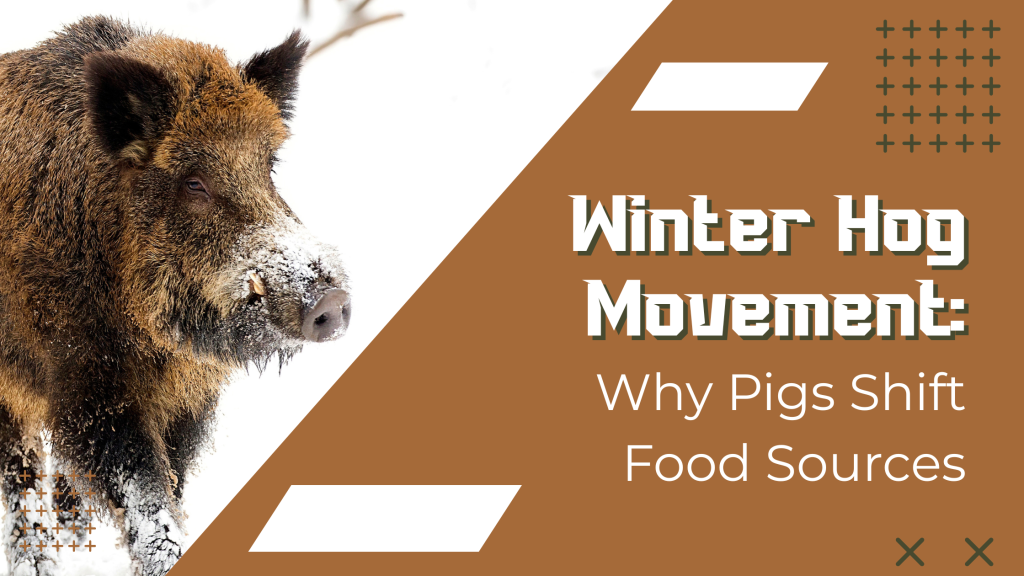
Winter Is When Patterns Get Honest
January and February reveal hog behavior and hog movement more clearly than almost any other time of year. When acorns are gone, crops are harvested, and green vegetation is thin, hogs must work harder to find calories. That pressure forces them into more predictable travel routes, tighter bedding cover, and very specific food sources.
For landowners and trappers, this late-winter window is not just another cold stretch. It is the period when good scouting can make or break your spring trapping results. Understanding how winter changes hog movement allows you to choose better camera locations, read signs more accurately, and position traps where sounders are already committed to travel.
How Winter Food Scarcity Reshapes Hog Movement
During fall, hogs can drift widely between mast, row crops, pastures, and natural forage. By late winter, that buffet is gone. Their movement concentrates around three main resources:
- Leftover agricultural grain
- Remaining mast and woody browse
- Protected thermal cover near water or bedding
On most properties this means hogs begin recycling the same travel loops, moving between:
- Cut corn or milo fields with spilled grain
- Oak pockets that still hold a few acorns or browse
- Thickets, pine stands, or creek bottoms that block wind and hold heat
If you map these three elements on your property, the winter picture usually tightens into a few high-traffic corridors instead of dozens of scattered routes.
January vs February: Subtle Hog Movement Shifts
Although both months feel like “winter,” hog movement can shift noticeably between early and late season.
- January: Hogs are still burning through residual fall food. Trails often run from bedding to remaining mast pockets and any fields that held grain into the new year. Rooting is common in pastures and field edges as hogs dig for leftover roots and invertebrates.
- February: As food tightens further, hogs push closer to dependable calories: protein feeders, hay storage, silage pits, or low-lying fields that stay soft enough to root. Travel corridors may stretch longer as sounders roam farther to find feed. They may also begin daylight movement on overcast or warm days simply because they need to cover more ground.
These seasonal shifts show up clearly if you are tracking hoof prints, mud smears, and rooting signs along trails. That is why pairing this article with Hog Tracks, Trails and Travel Patterns is so important for February planning.
Hog Tracks, Trails and Travel Patterns
Where Winter Hog Movement Actually Happens
In late winter, hogs do not wander randomly. They spend most of their time cycling between four specific zones on a property:
| Winter Zone Type | What It Looks Like | How Hogs Use It | Trapping Insight |
| Thermal bedding cover | Pines, cedars, brushy draws out of the wind | Daytime bedding and security | Place cameras on trails entering and leaving, not in the bedding itself |
| Reliable food source | Cut grain fields, protein feeders, silage, hay | Primary nighttime feeding areas | Ideal for long-term bait conditioning if neighbors are not feeding nearby |
| Travel bottlenecks | Gate openings, levee tops, creek crossings | Connect bedding and food | Best locations for February camera surveys |
| Soft, moist rooting ground | Low fields, seeps, creek flats | Rooting for tubers, worms, grubs | High-odds sign that sounders are visiting frequently |
Once these zones are identified, your winter scouting becomes targeted instead of wandering. The goal is to confirm where sounders are reliably cycling so March and April traps are not guessing at location.
Weather, Moisture, and Frozen Ground
January and February weather can compress hog movement even more. A few patterns are worth watching:
- Cold, clear nights: Hogs tend to stay tighter to bedding until frost begins to lift. Movement is later and often closer to cover.
- Warm fronts and overcast weather: Sounders may start feeding earlier in the evening and stay out longer, especially near high-calorie feed or soft soil.
- Hard freezes: Frozen topsoil pushes hogs toward creek bottoms, seeps, and any low-lying ground that thaws first.
- Winter rains: Moist fields and forest floors become rooting magnets, especially in areas that also offer cover or nearby crops.
If you log camera times and track freshness during these weather events, winter can give you some of the cleanest pattern data of the year.
Using Winter Patterns to Plan Whole-Sounder Trapping
The entire purpose of winter scouting is to capture full sounders in spring, not just collect photos. Hogs are social and will return to safe, consistent routes as long as they are not heavily pressured.
Key ways to connect winter patterns to whole-sounder trapping:
- Identify at least one location per sounder where trails, rooting, and sign converge near both food and cover.
- Use late-winter to pattern arrival times and group size with cameras.
- Avoid shooting into patterned sounders near future trapping sites so you do not fragment the group or push them nocturnal.
- Use March and April to transition from scouting to slow pre-baiting along these same travel corridors.
Once you are confident that a sounder is using a corridor consistently, systems designed for whole-sounder trapping strategies become far more effective because they are set directly in the path of daily movement.
Whole-sounder trapping strategies
How State-Level Patterns Inform Local Strategy
While every property is unique, state agencies and impact reports offer useful regional context on winter hog behavior.
State-level Hog Impact Guides show where winter rooting, crop pressure, and habitat damage are most severe and which regions see the earliest spring upticks in activity. Landowners can use this information to prioritize which leases or tracts get cameras and traps first.
Turn Winter Data Into Spring Results
Winter hog movement is not a mystery. It is a response to food, cover, and pressure. When you read those patterns early, you enter spring with a clear trapping roadmap instead of guessing where sounders might show up next.
If you are evaluating trapping systems for that spring window, consider how each option fits into the patterns you are already seeing. Silent, ground-level net systems that work along existing travel routes can turn the winter data you gather now into full-sounder results later, without adding noise or pressure to the property.