

Introduction: Tracking Hogs Is a Skill Every Landowner Should Learn
Hogs often move silently and mostly at night, which makes their travel behavior easy to overlook. Yet they leave behind a predictable set of signs that reveal where they feed, bed, wallow, and travel. Learning how to read hog tracks, trails, and movement patterns helps landowners and trappers understand how hogs use a property, how close they are to sensitive areas, and where hogs are likely to travel next, revealing where trapping opportunities may develop.
Tracks, trails, and movement patterns are not random. When interpreted correctly, they show the “flow” of a sounder across the landscape. This guide explains how to identify hog tracks, how to distinguish established trails from exploratory routes, and how to use these patterns to anticipate where hogs will appear next.
For foundational sign identification, see Signs of Wild Hogs.
Understanding Hog Tracks: Shape, Spread and Weight Indicators
Hog tracks are among the most reliable indicators of frequent movement through an area. Although they resemble deer tracks from a distance, closer inspection reveals key differences.

Wild boar track, note the rounded shape of the hoof print
1. Track Shape
Hog tracks have a more rounded, triangular appearance compared to the heart-shaped print of a deer.
Features include:
- Blunt, rounded tips
- Slight outward flare
- Wider overall shape
- Heavy heel impressions in softer soil
Deer tracks taper sharply at the tips. Hog tracks do not.
2. Size and Individual Identification
- Adult sows often leave tracks around 2 to 2.75 inches long.
- Large boars may leave prints over 3 inches long and significantly wider.
Track size helps estimate which animals are present, but track depth is just as important.
3. Track Depth and Soil Compression
Deep impressions often indicate:
- A heavier hog
- Wet or soft soil
- A sounder passing through rather than a single hog
Multiple overlapping prints in a short distance typically signal that juveniles and sows traveled together.
4. Dewclaw Marks
Hogs sometimes leave rear dewclaw imprints, especially:
- When running
- In soft mud
- When changing direction
These marks are wider than deer dewclaws and set farther back.
Trails: The Highways and Side Roads of Hog Movement
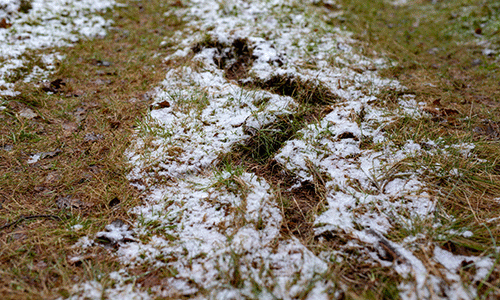
Hog trails are worn paths created through repeated movement. They may appear subtle at first but become more defined as a sounder increases visitation frequency.
Primary Trails
These are the main travel routes connecting:
- Bedding areas
- Feeding locations
- Water sources
- Crop fields
- Wallowing zones
Primary trails typically show:
- Flattened vegetation
- Consistent track direction
- Mud or hair on fence crossings
- Broad, well-packed soil
Secondary Trails
Secondary trails branch off from main routes and often indicate:
- Exploratory feeding
- Juvenile movement
- Seasonal food shifts
These paths may appear thinner, with lighter prints and less soil disturbance.
Fence Crossings and Gaps
Hogs rarely jump fences. Instead they push under or through weak points.
Look for:
- Mud smears
- Broken or bent wire
- Flattened grass on both sides
- Parallel tracks leading directly to the gap
These crossings are ideal locations for positioning cameras or scouting gear.
Table: How to Interpret Common Hog Trail and Track Patterns
| Sign Type | What It Looks Like | What It Means | Trapping Insight |
| Deep overlapping tracks | Multiple prints layered | A sounder is present | Predictable travel corridor |
| Narrow single-file path | Thin, straight, lightly worn | Lone boar or small group | Use cameras before baiting |
| Wide packed trail | Heavy wear, vegetation flattened | Frequent sounder use | Excellent site for bait conditioning |
| Dewclaw impressions | Marks behind the main track | Running or turning hogs | High activity or disturbance |
| Mud on fence wire | Smears at low height | Under-fence crossing | Prime location for monitoring |
How Hogs Choose Their Travel Paths
Hogs select travel routes based on safety, food availability and efficiency. Understanding these preferences helps predict where they will return.
1. Cover and Concealment
Hogs prefer routes that offer:
- Brush cover
- Thick grass
- Edge habitat
- Drainage lines
These areas allow hidden movement and provide escape routes if disturbed.
2. Scent and Sound Awareness
Hogs use scent heavily. They avoid areas where:
- Human activity is frequent
- Hunting pressure is high
- Predators (including dogs) leave fresh scent
Routes will shift quickly after pressure, which is why tracking must be ongoing rather than one-time.
3. Proximity to Water and Forage
Hogs rarely move far from:
- Creeks
- Wetlands
- Water troughs
- Natural springs
Trail density often increases near water edges, especially in summer months.
4. Terrain Slope and Soft Soil Preference
Hogs take the path of least resistance when possible.
They avoid steep grades but use:
- Sloped terraces
- Logging roads
- Livestock paths
- Low-lying field edges
Routes with soft, cool soil are used more frequently, especially during warm seasons.
Seasonal Movement Patterns
Season influences not just where hogs go but how often they travel.

Spring
Movement increases toward:
- Pastures
- Moist soil
- Early vegetation
- Crop fields being planted
Trails often appear along field edges and irrigation ditches.
Summer
Hogs concentrate around:
- Water sources
- Shaded creek lines
- Wet-bottom fields
Trails deepen as sounders make repeat passes to water and feed.
Fall
Hardwoods become primary travel zones during acorn and mast drop.
Winter
Hogs may move more frequently between bedding cover and crop remnants.
Frozen soil near fields pushes activity into wooded areas.
For regional specifics, see Regional State Guides.
Predicting Where Hogs Will Go Next
Track and trail interpretation allows landowners to forecast hog movement with surprising accuracy.
Look for Convergence Points
When multiple trails funnel into:
- A single field opening
- A creek crossing
- A fence gap
- A ridge saddle
These points often represent ideal locations for monitoring hog traffic.
Use Moisture and Weather as Predictors
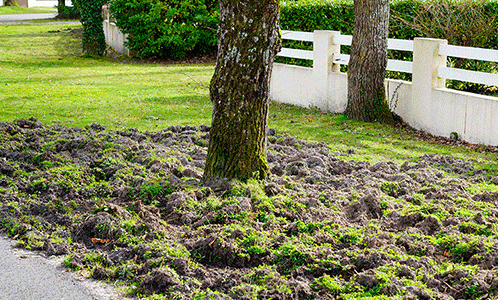
After rain, hogs commonly shift to:
- Freshly softened fields
- Wet pastures
- Moist forest floors
Tracks and rooting signs appear rapidly in these conditions.
Follow Food Sources
Hogs move linearly between seasonal food supplies.
For example:
- Emerging crops in spring
- Insects after summer rains
- Mast in fall
Mapping these food sources helps anticipate where hogs will appear next.
Monitor Edges and Transitions
Hogs frequently travel along edges where two habitat types meet:
- Field to timber
- Timber to wetland
- Pasture to crop field
These border zones are high-value scouting areas.For full-sounder capture strategy, see Whole Sounder Trapping.