
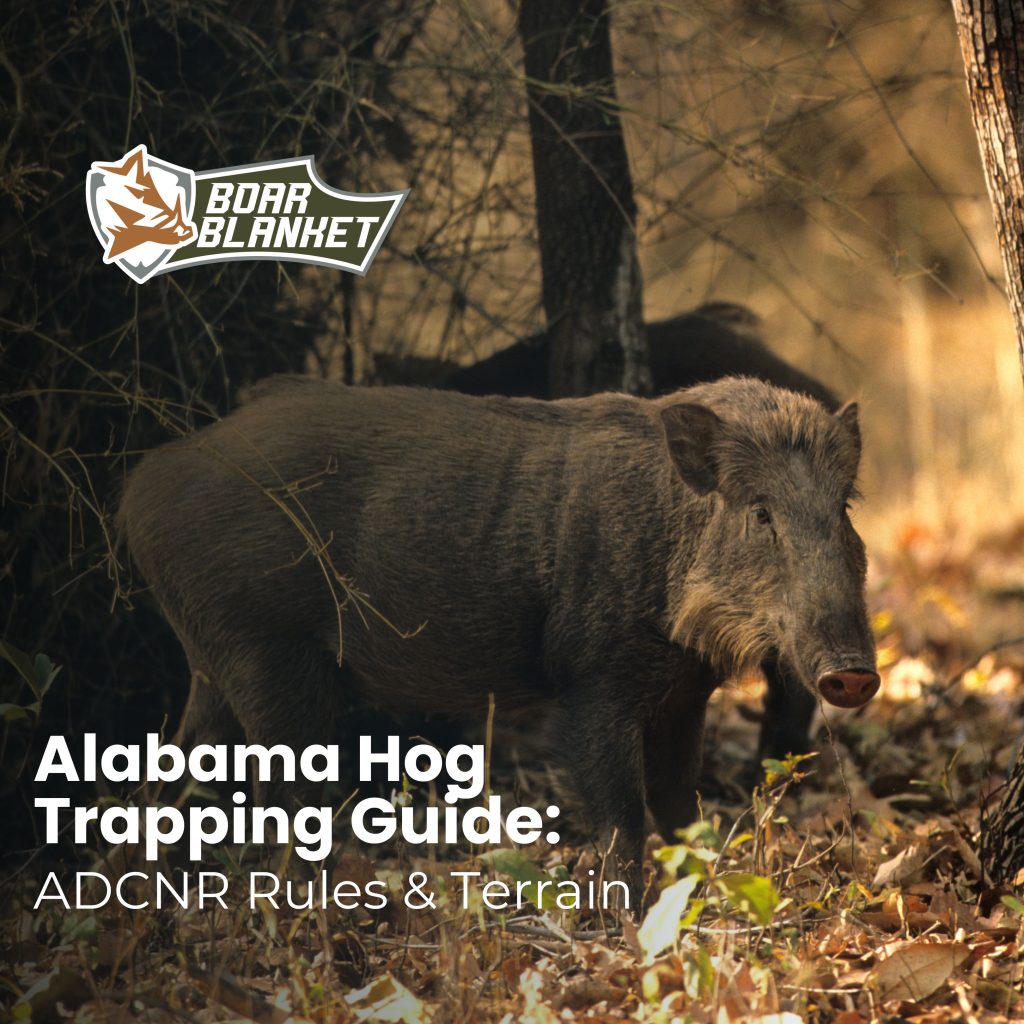
Alabama Hog Trapping Guide: ADCNR Rules & Terrain
Alabama’s Feral Hog Problem in 2026: Distribution and Damage
Feral hogs are more than a nuisance in Alabama—they are a growing ecological and economic threat. USDA APHIS estimates feral hogs cause over $2.5 billion in annual damage across the U.S. In Alabama, the impact is especially harsh in regions like the Black Belt and the timber-rich Coastal Plain. Hogs root up crops, ruin pastureland, and slow forest regrowth. Their presence also harms native wildlife, water quality, and even infrastructure. This Alabama hog trapping guide covers ADCNR regulations, regional terrain, and operations.
Recent field surveys confirm feral hogs now live in every Alabama county. The Black Belt, lower Coastal Plain, and river bottomlands have the densest populations. These areas offer fertile soil, thick cover, and plenty of food—perfect for large sounders. As a result, landowners, farmers, and timber managers face constant losses in crops, seedlings, and habitat. For more on the scope of wild hog damage, see our wild hog damage prevention guide.
ADCNR Rules Every Alabama Trapper Needs to Know
The Alabama Department of Conservation and Natural Resources (ADCNR) sets the main rules for hog trapping in Alabama. Every trapper must follow these rules to stay legal and avoid fines. Key requirements include:
- Licensing: No special license is needed for trapping feral hogs on private land, but written landowner permission is required if you are not the owner.
- Trap Monitoring: Traps must be checked at least every 12 hours to ensure humane treatment.
- Humane Removal: Captured hogs must be removed within 24 hours after the trap closes.
- Transport: It is illegal to move live feral hogs except with a strict permit.
- Depredation: Hogs may be trapped or taken year-round on private land where they cause damage.
For a full summary of Alabama’s hog trapping laws, see our state-by-state hog trap regulations. The table below offers a quick reference on ADCNR rules and their practical meaning.
For land managers, Alabama hog trapping should start with the right legal footing before the first bait site goes out.
Private Land vs Public Land: What Alabama Law Actually Allows
Most hog trapping in Alabama takes place on private land, where the rules are more flexible. Landowners, farmers, and timber managers can set traps without a hunting license, as long as they have written permission if they do not own the land. Night trapping and electronic monitoring are also allowed on private property.
On public land, hog trapping is much more restricted. ADCNR generally bans trapping on Wildlife Management Areas (WMAs) and state parks unless it is part of a control program. Sometimes, special permits are given for research or coordinated removal. Always check the latest ADCNR guidance and the rules of the specific land agency before trapping on public land. For more details, see our wild boar trap comprehensive pillar guide.
12-Hour Monitoring and 24-Hour Removal in Practice
Alabama law requires all live traps to be checked at least every 12 hours, and any trapped hogs must be removed within 24 hours of closure. This rule protects animal welfare and ensures ethical trapping. In practice, this means:
- Using remote cameras or cellular trap monitors to alert you when a trap closes.
- Planning trap checks for early morning and late afternoon, especially during hot, humid weather.
- Having a removal plan ready before deploying the trap, including safe handling and dispatch methods.
For a step-by-step camera setup guide, visit our hog trap camera setup guide. These practices help you stay legal and also improve trapping success by reducing animal stress and escapes.
Regional Playbook: Coastal Plain, Black Belt, Piedmont, Appalachian Foothills
Alabama’s varied regions require different hog trapping strategies. Sounder sizes, habitat, and baiting methods change by landscape. Use this regional playbook to adjust your trapping plan:
- Coastal Plain: Large sounders (15-30 hogs), dense pine and hardwood forests, best for large corral or net traps.
- Black Belt: Medium to large sounders (10-20 hogs), mix of cropland and pasture, whole-sounder net traps work well here.
- Piedmont: Smaller sounders (5-12 hogs), rolling hills and mixed timber, use flexible net systems and careful bait placement.
- Appalachian Foothills: Small, wary sounders (3-8 hogs), steep terrain and thick brush, mobile traps and camera-driven setups are best.
For a detailed regional breakdown, see the table below. You can also explore our comprehensive hog management guide for more on adapting your approach to local conditions.
Why a Whole-Sounder Approach Beats Box Traps in Alabama Terrain
Many Alabama land managers wonder why box traps often fail. The answer is hog behavior. Feral hogs move in family groups called sounders. Box traps usually catch only one or two hogs, leaving the rest of the group wary and hard to catch later.
Whole-sounder capture methods—like large corral traps or net systems such as the Boar Blanket trapping system—are designed to catch entire groups at once. These traps use remote monitoring and smart baiting to close only when the full sounder is inside. This is especially effective in Alabama’s thick woods, where hogs quickly learn to avoid danger. For a comparison of trap types and their effectiveness, see our wild boar trap comprehensive pillar guide.
Bait, Conditioning, and the Closure Window in Humid Southern Climate
Baiting and conditioning are key for successful hog trapping in Alabama’s humid climate. The goal is to lure the whole sounder into the trap and make them comfortable before closing the gate or net. Key steps include:
- Bait selection: Use fermented corn, peanuts, or commercial attractants that last in wet weather.
- Conditioning: Pre-bait the trap site for several days, letting hogs feed freely and get used to the trap.
- Closure window: Watch camera feeds closely and trigger the trap only when the full sounder is inside.
Humidity can spoil bait fast, so refresh bait often and use mats or containers to keep it dry. For more baiting tips, see our hog trap bait guide.
Camera-Driven Operations: HogEye in Alabama Cell-Coverage Conditions
Remote trap monitoring is now standard in Alabama. Cellular camera systems like HogEye let you check traps in real time and close them from your phone. However, Alabama’s terrain can cause cell coverage problems, especially in bottomlands and remote woods.
To improve reliability:
- Test cell signal at your trap site before setting up.
- Use high-gain antennas or signal boosters if needed.
- Place cameras higher or near open areas to boost reception.
For a camera setup guide tailored to Alabama, visit our hog trap camera setup guide. Camera-driven operations help you follow the law and increase your chances of catching the whole sounder.
Coordinating With Neighbors and the Alabama Extension System
Effective hog control rarely works alone. Sounders cross property lines, so working with neighbors is vital. The Alabama Cooperative Extension System (Alabama Extension) offers free resources and expert help for land managers fighting feral hogs. Their staff can advise on trap placement, hog behavior, and management strategies.
Steps for successful coordination:
- Talk with nearby landowners before starting a trapping campaign.
- Share camera data and hog movement patterns to time trapping efforts.
- Work with Alabama Extension for workshops, site visits, and regional updates.
For more on working with Extension and reporting hog damage, see our comprehensive hog management guide.
Compliance Checklist Before You Deploy Your First Trap
Before setting your first hog trap in Alabama, review this compliance checklist:
- Get written permission if trapping on land you do not own.
- Pick a trap type suited for whole-sounder capture (corral or net system).
- Set up remote cameras for 12-hour monitoring and 24-hour removal compliance.
- Prepare bait and pre-bait the site for at least 3-5 days.
- Check ADCNR rules for updates or regional restrictions.
- Coordinate with neighbors and Alabama Extension for best results.
- Have a humane dispatch and removal plan before trapping starts.
For more on Alabama’s hog trapping regulations, visit our state-by-state hog trap regulations. For hunting regulations, see our Alabama deer season and hog notes page.
If you manage land in Texas or Oklahoma, see our Texas guide and Oklahoma guide for state-specific strategies.