
Why Early Detection Matters for Everyone on the Landscape
New World screwworm is contained fastest when someone on the ground notices it early and reports it. That someone is usually a landowner, not a veterinarian. You don’t need clinical training to be a useful early-warning system: you need to know what to look for, what to ignore, and who to call. This guide is awareness only: if you suspect a case, the job is to document and report, not to diagnose or treat.
What to Look For: Wounds, Behavior, and the Live-Tissue Rule
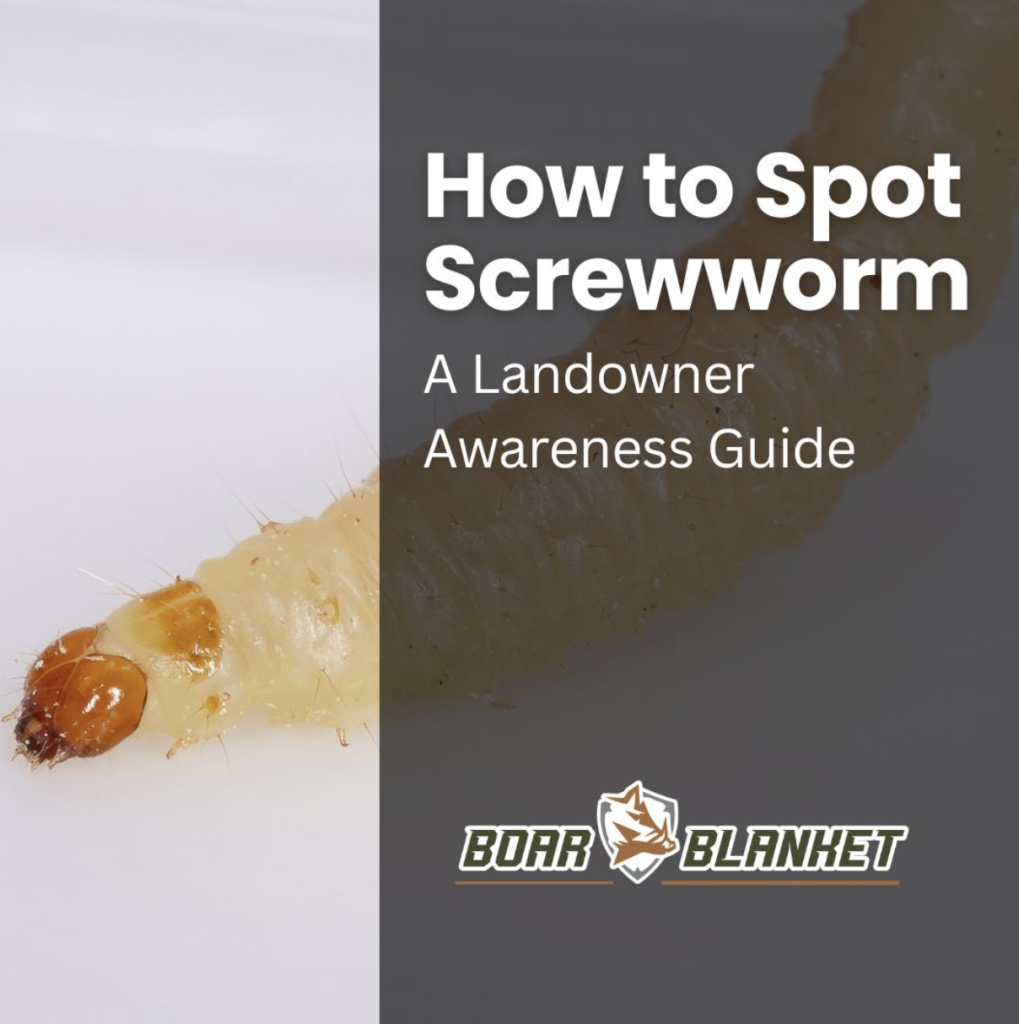
Screwworm starts in a wound on a live animal. The signs that should get your attention are an animal favoring or repeatedly licking a wound, a sore that smells foul and gets larger instead of healing, visible larvae working inside living tissue, and a wound that seems to draw an unusual number of flies. Newborns with fresh navels and animals with recent cuts, bites, or working-event wounds are the highest-risk candidates.
Where Infestations Start on an Animal
Think about where skin breaks happen: navels on newborns, castration and branding sites, ear tagging, tick and insect bites, barbed-wire scrapes, and fighting wounds. Any of these can become an entry point. Knowing the likely locations makes a quick visual check far more effective during the times of year when fresh wounds are common.
Spotting Risk in Animals You Can’t Inspect Up Close (Wildlife and Hogs)
The hardest cases to catch are the ones you can’t get your hands on. You can inspect penned livestock; you can’t walk up to a deer or a feral sounder. That blind spot is real, and it’s why reducing the number of unmonitored animals on your ground (especially feral hogs, which move up to six miles a day and attract flies) is part of lowering overall risk. Controlling hog numbers won’t treat anything, but it shrinks the pool of animals nobody is watching.
The Fact That Cuts Through Confusion: "If It’s on Shit, That Isn’t It"
The fastest way to avoid a false alarm: "If it’s on shit, that isn’t it." New World screwworm breeds on live animals, not on manure or established carrion. Maggots in a cow patty, in spoiled feed, or in a long-dead carcass are ordinary flies. The thing to watch for is larvae feeding in the living tissue of a wound on a live animal. Keep that line in mind, and you’ll spend your attention where it counts.
What to Do If You Suspect a Case: Report First
If something looks wrong, document it (photos and location notes help) and contact USDA APHIS and your state animal-health authority right away. Do not attempt to diagnose or treat the animal yourself; reporting first is what allows officials to confirm, contain, and respond. Early reporting is the difference between a single managed case and a regional problem.
Reducing the Conditions That Invite Risk on Your Property
You can lower the odds with ordinary good management: tend to fresh wounds during calving and working events, keep an eye on high-risk animals, and treat feral hog density as a health variable rather than just a crop nuisance. On the hog side, whole-sounder removal is the high-leverage move: it reduces unmonitored hosts and fly pressure at the same time. If you want to see how the broader toolkit fits together, our comprehensive feral hog control methods guide lays out the options, and you can compare regional approaches when you shop hog traps by state.
Awareness Checklist for Landowners and Land Managers
Keep it simple and repeatable: know the live-tissue rule, check wounds during high-risk events, watch for sores that worsen instead of heal, never treat manure maggots as screwworm, report suspected cases to USDA APHIS and your state authority first, and keep feral hog numbers down so fewer unwatched animals share your ground. For background, start with what New World screwworm is and why feral hogs accelerate screwworm risk. This matters most across the warm South: Texas, Mississippi, Louisiana, Oklahoma, and Alabama.
Frequently Asked Questions
- What are the signs of screwworm in animals?
A wound that worsens instead of healing, a foul smell, an animal favoring the area, and larvae feeding in living tissue. Report suspected cases rather than diagnosing them yourself. - How do I tell screwworm from ordinary maggots?
Ordinary maggots feed on waste and dead material; screwworm larvae feed in the living tissue of a wound on a live animal. "If it’s on shit, that isn’t it." - Where on an animal does screwworm usually start?
At a break in the skin: newborn navels, castration or branding sites, tick bites, and barbed-wire scrapes are common entry points. - Can I check wild hogs and deer for screwworm?
Not practically. That’s the monitoring blind spot. Reducing feral hog numbers lowers the count of unwatched, wound-prone animals on your land. - What should I do if I find a suspected screwworm wound?
Document it and report to USDA APHIS and your state animal-health authority immediately. Do not attempt to treat it yourself. - Who do I report a suspected case to?
USDA APHIS and your state animal-health agency (such as the Texas Animal Health Commission). Report before taking any other action. - Does screwworm only affect livestock?
No. Any warm-blooded animal with a wound is at risk, including deer and feral hogs, which is why unmonitored wildlife matters. - How can I lower the risk on my land?
Practice good wound management, watch high-risk animals, report anything suspicious, and keep feral hog numbers down through whole-sounder removal.