
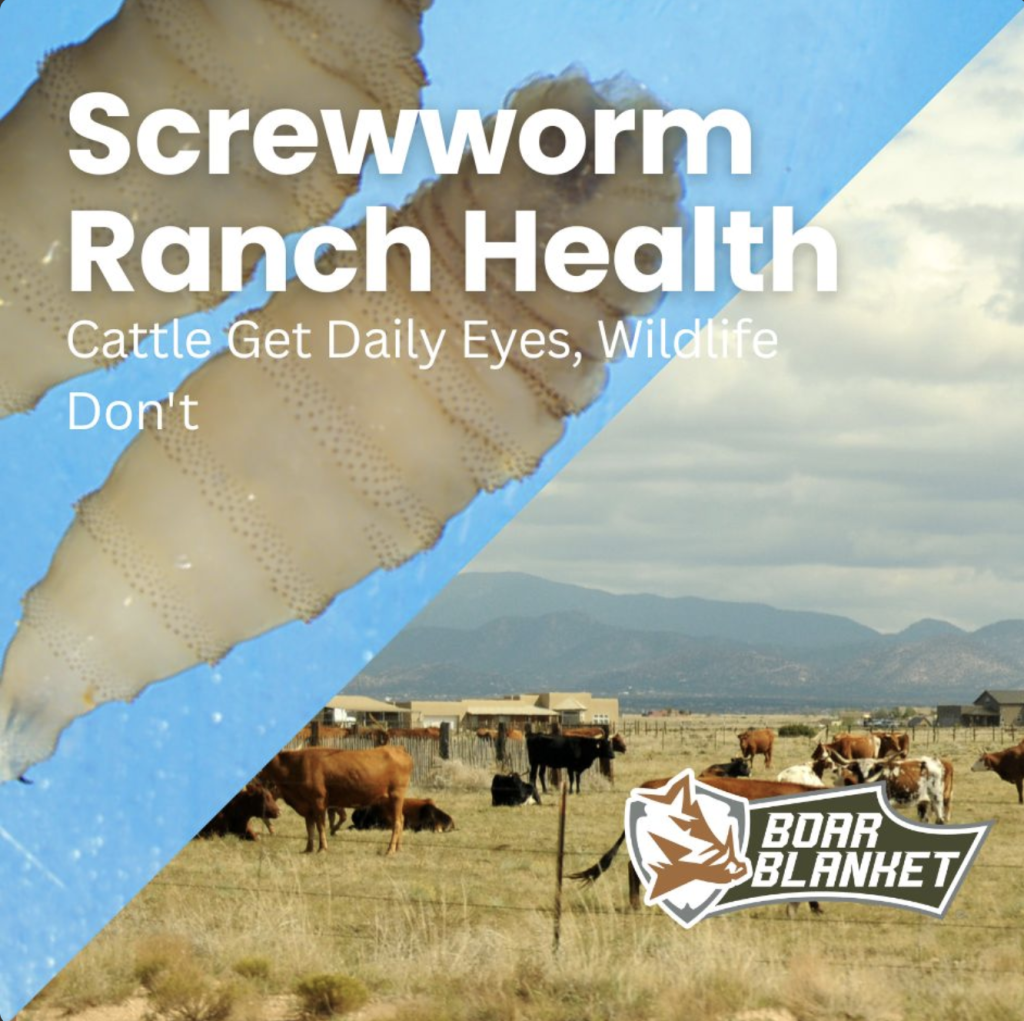
Screwworm Ranch Health Starts With Inspection Coverage
On working land, screwworm ranch health is not just an animal-health concern. It is a coverage problem. Cattle, horses, and other livestock usually have a place in the daily rhythm. Someone counts them, moves them, fills water, notices a bad step, and spots wounds that were not there yesterday.
Wildlife and feral hogs use many of the same edges: creek bottoms, feeder routes, fence gaps, shade, mud, and water. They do not usually get the same eyes. If the inspection plan stops with animals you handle, the property has a livestock routine. It does not yet have a landscape-health routine.
Feral hog damage already carries a conservative minimum of $3.4 billion annually across agriculture, health, the environment, and property, according to the 2025 Pest Management Science paper Wild pigs, wild costs. That alone is enough reason to put hog work on the operations calendar. The narrower ranch question is more immediate: what does your current routine actually let you see?
Daily Livestock Checks Are Not the Same as Full Coverage
Daily or near-daily livestock checks matter. They catch a wire cut, a pinkeye case, a fresh navel, a girth rub, or a calf that is not acting right. That cadence gives the operator a working sense of the animals in hand. The mistake is letting that confidence spread across acres that are barely observed.
A cow at the water lot is not a proxy for a doe in brush. A horse in a paddock is not a proxy for a feral sow using the creek at midnight. A normal morning count does not tell you what moved through a feeder lane after dark. Those are different inspection zones, and they need a simple place in the schedule.
Use a plain test. If a new hand described the health routine, would they mention only livestock? If so, the plan is built around handling, not property-wide observation. “Watch for strange wounds if you happen to see one” is not a system. A system has an interval, known locations, a record of what was seen, and a contact list for anything suspicious on live tissue.
Wildlife and Feral Hogs Create the Blind Spot
New World screwworm is a live-tissue problem. The female fly is drawn to wounds on warm-blooded animals. Eggs are laid at living tissue, and larvae feed in that tissue. The field line is blunt because it prevents confusion: “If it’s on shit, that isn’t it.” Maggots in manure, spoiled feed, or old carrion point to ordinary flies. Maggots working in a wound on a live animal, or in rare cases a very recently deceased one, are the pattern animal-health officials care about. NWS does not breed in feces.
Livestock wounds get found because livestock get handled. Wildlife wounds often do not. Deer, feral hogs, and other free-ranging animals can pick up injuries from wire, ticks, fighting, farrowing, hunting pressure, vehicle strikes, rooting, and wallowing. The difference is not that livestock are the only animals at risk. The difference is that livestock are the animals most likely to be seen up close.
Feral hogs make that blind spot larger because they combine mobility, density, and rough behavior. A sounder is a family group, not a random handful of hogs. Leave it in place, and you are carrying uninspected hosts across the same ground where cattle may be checked every day. You cannot inspect those hogs like you inspect a cow. You can reduce how many remain.
That makes hog control a density job, not a clinical job. Recognition steps, including what to look at, what to ignore, and who to call, belong in the how to spot screwworm landowner guide. Do not turn that guide into a treatment plan. Document what you see and report it.
What Land Managers Can Control
Stay in your lane, and the work gets clearer. You can keep livestock inspections frequent. You can review camera cards, water gaps, wallows, feeder approaches, and known wildlife crossings on a regular schedule. You can keep USDA APHIS, the state animal-health agency, and your veterinarian on a one-page contact list beside the other emergency numbers.
- Give livestock checks a daily or near-daily owner.
- Add a weekly review of wildlife movement areas and camera history.
- Record unusual wounds instead of relying on memory.
- Reduce feral hog density on ground you manage.
- Report suspicious live-tissue wounds promptly.
You cannot diagnose NWS, prescribe treatment, or inspect every deer on the place. Do not delay a report while you “watch it a few days.” The job is to notice, document, call, and keep the calendar moving. Hog trapping continues because it is population control, not medicine.