
Insights, Tips, and Stories on Wild Boar Management
Welcome to the Boar Blanket Blog, your go-to source for everything wild boar management. Whether you're a landowner, farmer, wildlife manager, or just curious about the challenges and solutions surrounding feral hogs, you’re in the right place.
At BoarBlanket.com, we don’t just talk the talk, we’re in the field, testing, learning, and leading the charge in humane, effective, and innovative wild boar control. Our blog is where we share that experience with you. We believe that solving the wild boar problem takes more than tools, it takes knowledge, partnership, and real-world results. That’s why we’re proud to share what we learn, every step of the way.
Take a look around, dive into a topic that speaks to you, and if you have questions or ideas, we’d love to hear from you. Together, we can protect what matters.
Because when it comes to wild boars… nothing works like a Boar Blanket.

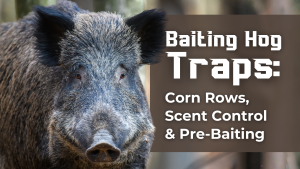
Successfully trapping wild hogs starts long before a net or trap is ever set. One of the most important steps in baiting hog traps for whole-sounder success is pre-baiting, a conditioning phase that teaches hogs to trust a site, return consistently, and enter without hesitation. Many landowners skip this step and, as a result, catch […]
Read More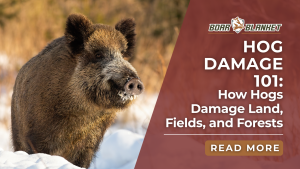
Wild hogs are responsible for some of the most severe and expensive hog damage in the United States. Their rooting, wallowing, and feeding behavior can destroy fields, pastures, forests, and food plots in a single night. What many landowners do not realize is how quickly this destruction compounds. A sounder does not simply pass through […]
Read More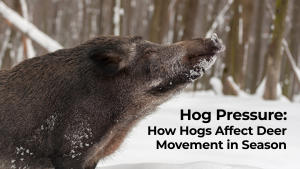
Wild hogs and whitetail deer often share the same habitat, food sources, and travel corridors. During deer season, this overlap becomes a major frustration for landowners and hunters who suddenly notice quiet mornings, empty feeders, and deer disappearing from camera patterns. The cause is often hog pressure, a powerful disruptor that changes deer behavior more […]
Read More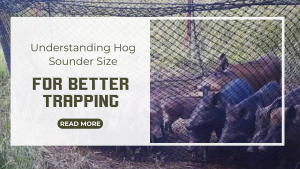
Wild hogs rarely travel alone. They move, feed, sleep, and root in organized family groups called sounders. Understanding sounder size, how these groups behave, and how they use the land is essential for any landowner trying to eliminate feral hog populations. This guide breaks down group structure, size ranges, reproduction patterns, and the behaviors that […]
Read More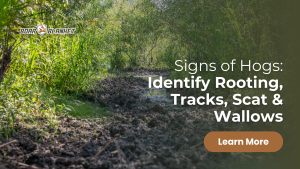
Wild hogs are one of the most destructive invasive species in North America. They tear up fields, destroy pastures, contaminate water, and can wipe out 10–20 acres in one night. Before landowners can trap hogs effectively, they must first confirm that hogs are present. This guide breaks down the major signs of hogs including rooting, […]
Read More
Across the frozen fields of Alberta, Saskatchewan, and Manitoba, a new threat is spreading fast: Canadian super pigs, a hybrid feral hog now dominating the Prairies. These cold-hardy hybrids of domestic swine and European wild boar are larger, smarter, and more adaptable than any other feral hog population in North America. Originally raised for meat […]
Read More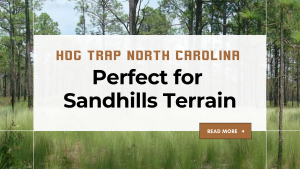
If you live or hunt in North Carolina’s Sandhills region, you know the ground never stays the same. One day it’s dry and loose; the next, it’s soaked and shifting. That’s exactly what makes trapping hogs on Sandhills terrain so difficult, and why most traditional systems simply don’t work. Steel cage traps sink. Drop gates […]
Read More
For North Carolina deer hunters, the 2025 deer season may be remembered not for a tough rut or warm fall, but for the year feral hogs began outnumbering deer in trail cam photos. From the Sandhills to the Piedmont, wild hogs are transforming the way deer move, feed, and breed. Landowners who once managed pristine […]
Read More
From the coastal plains to the mountain valleys, feral hogs are now a permanent part of North Carolina’s landscape. Once limited to isolated populations, these invasive animals have expanded rapidly — rooting through crops, tearing up forests, and threatening native wildlife, which is why hog hunting has become increasingly common across the state. The North […]
Read More
If you’ve ever tried to set up hog traps in South Carolina’s Low Country, you already know the challenge: knee-deep mud, shifting ground, and water that refuses to stay still. Traditional steel cage traps and electronic drop systems simply weren’t built for that. Heavy panels sink. Gates jam. Remote triggers lose signal. And within a […]
Read More